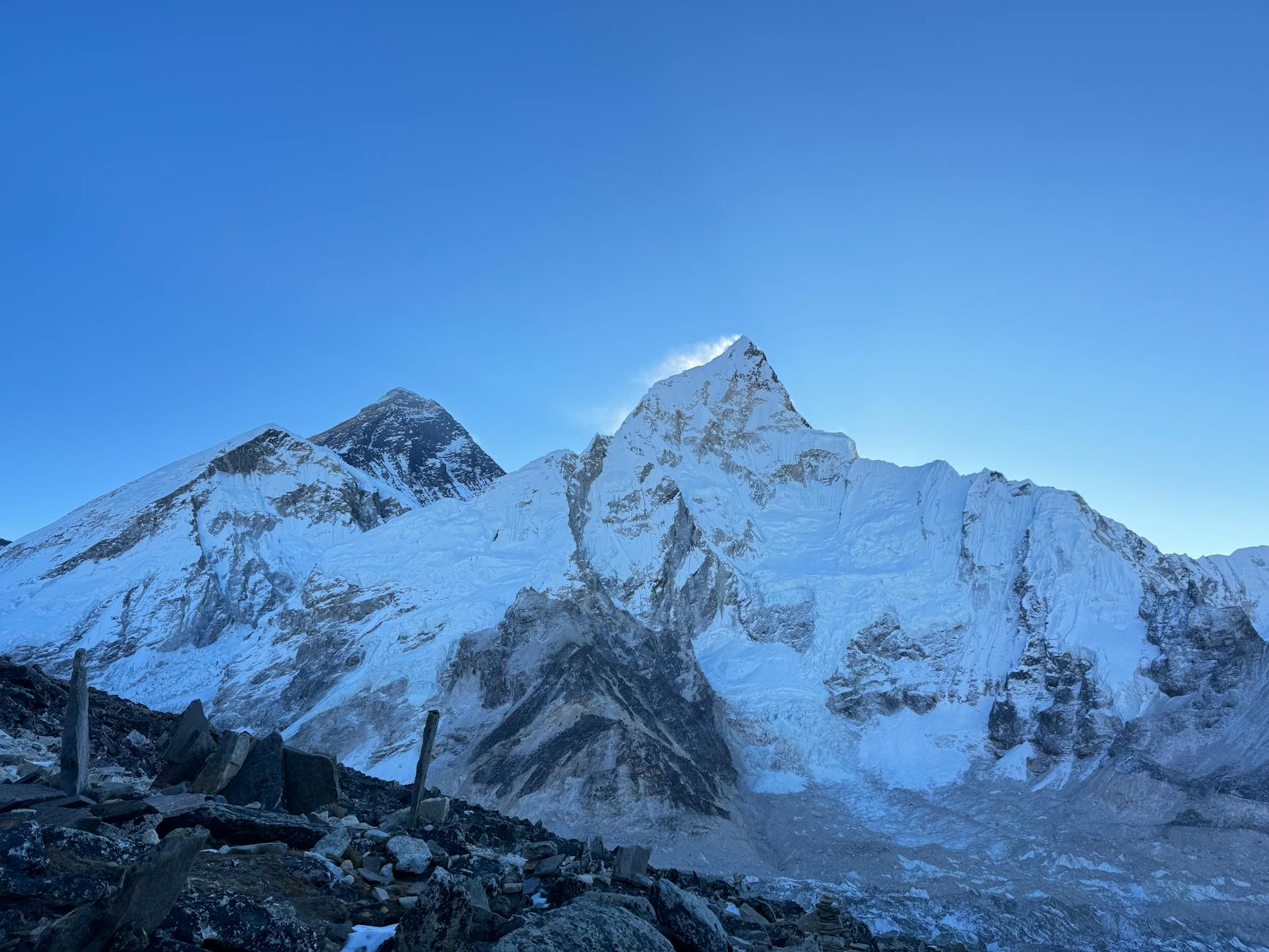
A massive, unstable chunk of glacier is currently blocking the primary climbing route on Mount Everest, threatening the start of the peak spring season in the Himalayas, according to bbc.com.
The 100-foot-high (30m) block of ice, known as a serac, sits just below Camp 1 on the Nepalese side of the mountain.
"Icefall doctors"—specialists tasked with fixing ropes and ladders to ensure safe passage—report they have found no way to bypass the obstruction.
According to the outlet, the only current option is to wait for the ice to melt, a process climbers hope will occur within days.
Summit congestion fears
The delay has pushed preparations weeks behind schedule. This timing is critical, as the window for favorable weather on Everest typically closes by the end of May.
Purnima Shrestha, a prominent Nepali climber and photographer currently acclimatizing for her sixth summit attempt, told the BBC from Base Camp that the delay has heightened fears of summit congestion.
"We usually climb between Camp I, Camp 2 and Camp 3 back and forth during this acclimatising process. Delays in the opening of the route have added concerns of possible 'traffic jams' to the peak this year," Shrestha said.
The rope-fixing team operates under the Sagarmatha Pollution Control Committee (SPCC). While the team reached Base Camp three weeks ago, they have been unable to progress past the blockage located roughly 600m below Camp 1.
"We haven't found artificial ways to melt it so far, so we don't have any options other than to wait for it melting and crumbling itself," said SPCC base camp co-ordinator Tshering Tenzing Sherpa.
Experienced icefall doctor Ang Sarki Sherpa noted that the lower part of the serac appears weak. He reported that the crevasse below the ice is melting and the block is close to collapsing.
"There is no choice. We spent four and a day touring the area, looking at every place from the mountain to the right and left," Ang Sarki Sherpa said.
Nepal's Department of Tourism is exploring logistics to mitigate the delay. Director General Ram Krishna Lamichhane said the department is considering airlifting rope-fixing teams and supplies directly to Camp 2 via helicopter.
"We will wait for the ice to melt at the place where there is an obstruction and work there when everything is safe," Lamichhane said.
Despite the blockage, climbing interest remains high. The Department of Tourism has issued 367 climbing permits so far this season, with a significant number of applicants from China.
While global fuel costs and travel disruptions due to the Iran war have caused a slight dip in some trekking sectors, Dambar Parajuli, president of the Expedition Operators' Association, said mountaineering remains largely unaffected.
Nepal has also implemented significant fee increases this year. Climbing fees for foreign nationals have risen from $11,000 to $15,000, while fees for Nepali climbers have doubled to $1,000.