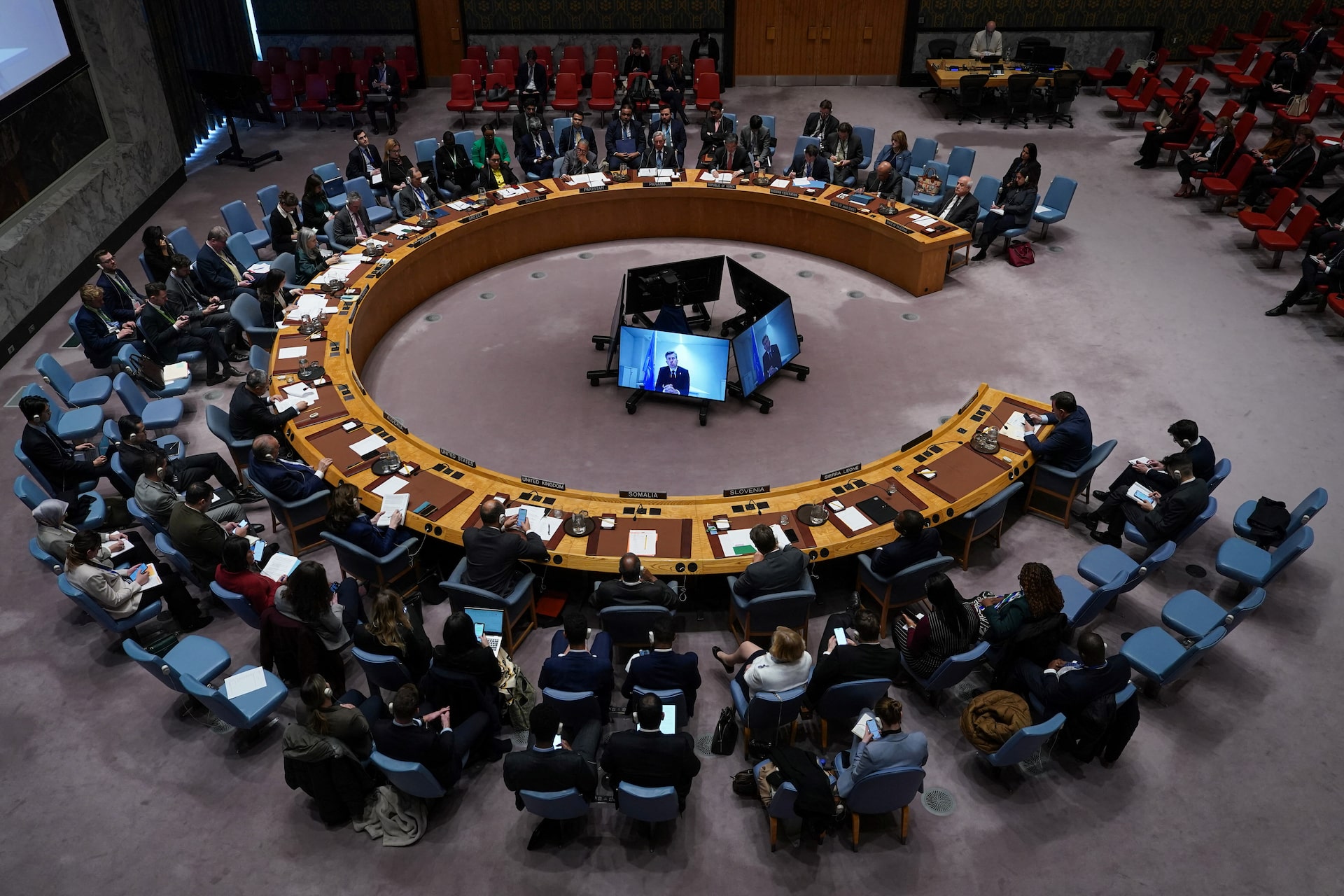
Russia and China blocked a United Nations resolution Tuesday that would have authorized the use of force to reopen the Strait of Hormuz. The vote followed weeks of tense negotiations at the Security Council.
Bahrain, a non-permanent member, introduced the proposal two weeks ago. The original text sought a clear mandate for any state or coalition to use military force to clear the strategic waterway. However, opposition from permanent members forced several revisions. The vote, initially scheduled for last Friday, faced repeated delays as Moscow and Beijing signaled their intent to veto the measure.
Escalating tensions in the Gulf
The diplomatic impasse coincides with a strict ultimatum issued by U.S. President Donald Trump. Trump warned on Tuesday that "a whole civilization will die" in Iran if the regime fails to comply with demands by 8:00 p.m. Washington time.
President Trump stated Monday that Iran must abandon its nuclear program entirely to secure a deal with the United States. While the administration has previously identified the reopening of the Strait of Hormuz as an essential condition, Trump has also suggested it is not an absolute requirement for Washington.
Reports from the New York Times indicate that Iran may consider lifting the blockade in exchange for a toll. Under this proposal, Tehran would charge $2 million per vessel to pass through the strait, sharing the revenue with the Sultanate of Oman. Iran suggests using these funds to rebuild infrastructure damaged by recent Israeli and American strikes rather than seeking direct financial compensation.
Analysts remain skeptical that a compromise is near. Sina Toossi, a fellow at the Center for International Policy in Washington, told AFP that Iran is unlikely to retreat.
"Iran will not yield on its vital interests, especially on its control of the Strait of Hormuz, whatever the cost," Toossi said.