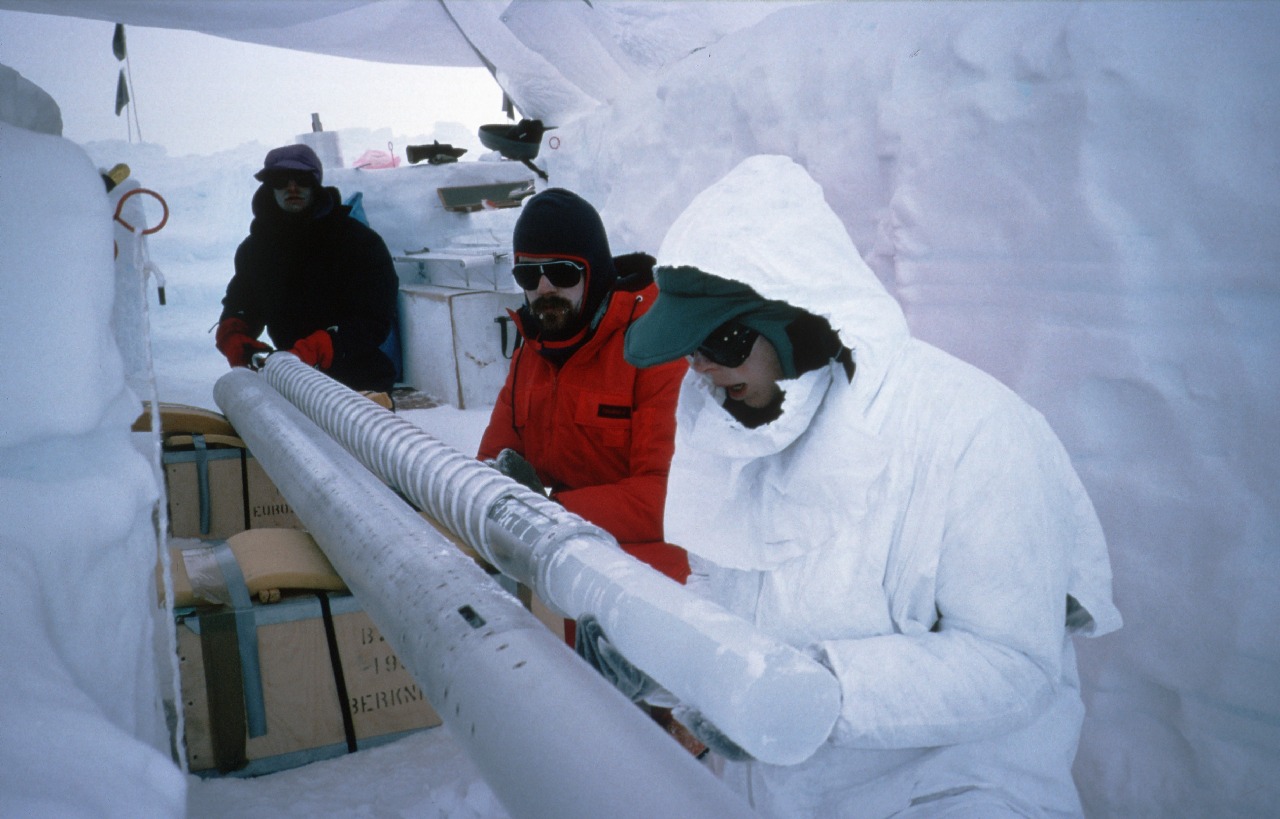
A team of scientists has recovered an ice core from deep within Antarctica, effectively opening a natural time capsule sealed for one million years. According to reporting from Meteored, the samples represent a pivotal discovery for understanding the Earth’s climatic history.
The ice contains trapped air bubbles that preserve the state of the atmosphere during the Mid-Pleistocene Transition. This era marked a fundamental shift in the planet's climate rhythm, as glacial cycles lengthened from 40,000 years to 100,000 years.
Unlocking the Mid-Pleistocene Transition
Researchers view the "blue ice" samples as a chemical map of the ancient world. The air bubbles trapped within the ice provide levels of carbon dioxide and methane that allow scientists to compare prehistoric air purity with modern atmospheric conditions.
In addition to greenhouse gases, the samples contain pollen and volcanic ash. These elements allow experts to reconstruct historical ecosystems and analyze how life survived during periods of extreme climatic upheaval.
Geologists have struggled for decades to explain why the Earth slowed its glacial cycles. By analyzing these samples, the team hopes to identify the mechanism that acted as a "glacial switch" during this transition.
Data from the samples provides a stark contrast to more recent findings. While standard ice cores typically reach back 800,000 years, this new discovery pushes the record past the million-year mark, offering a clearer view of the origin of current glacial cycles.
Scientists intend to use this chemical memory to build more accurate predictive models for the 21st century. By studying how the planet managed drastic changes without human interference, researchers aim to better understand the current trajectory of global warming.