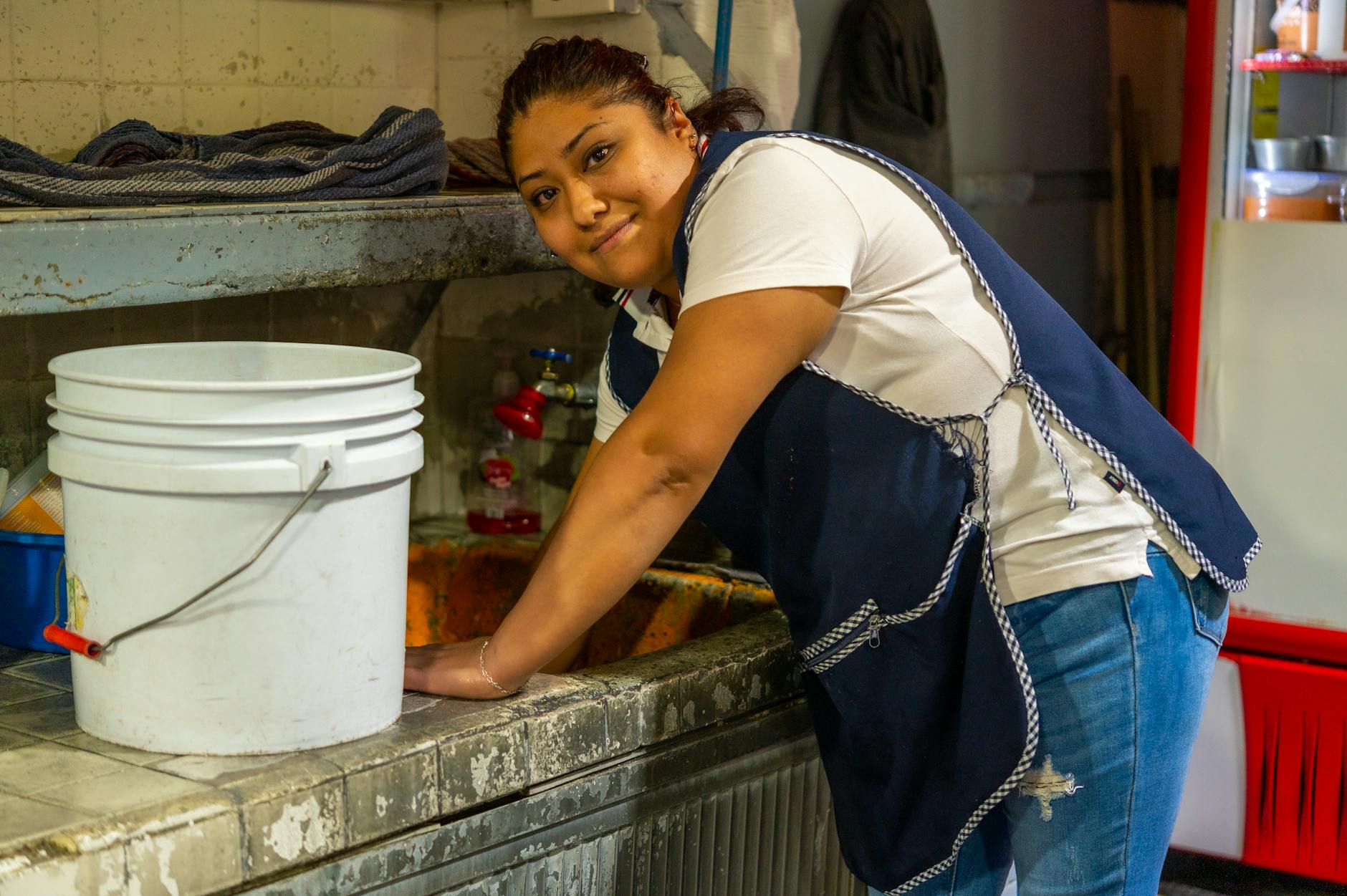
Thousands of young Mexican women, unfairly classified as people who 'neither study nor work,' are propping up the national economy through domestic and caregiving shifts that reach 2,700 hours per year. Research presented this Thursday by Oxfam Mexico, and reported by elfinanciero.com.mx, reveals that this invisible sector exceeds the economic value of industries like manufacturing and retail.
The study highlights that three out of four young people who remain outside the formal education and labor systems are women. Ninety-five percent of them spend between 5.2 and 7.6 hours a day caring for family members, cleaning, and performing other household chores. Collectively, this work accounts for 23.9 percent of Mexico's Gross Domestic Product (GDP).
Stephanie Ize, a 27-year-old sociologist, is one of the faces behind these figures. For nearly a decade, Ize balanced her university studies with caring for her parents, both of whom were battling cancer. "It was 24/7, from Monday to Sunday, being there all the time taking care of my dad, taking care of my mom, making sure she didn't have a relapse," she told the EFE agency following the report's release.
A Stigma That Obscures Reality
Ize argues that the term 'nini' (the Spanish equivalent of NEET) functions as a stigma that reduces complex life experiences to an empty label. "People see that you are at home all day, but they don't see the background of the situation," said Ize, who recalls having to administer medication and assist her father with personal hygiene tasks while trying to finish her degree.
For Mariana Belló, coordinator of the care strategy at Oxfam Mexico, these women act as a buffer for the social crisis. "They are functioning as a subsidy and a true safety net for the care crisis, assuming a responsibility that other social actors are not taking on—primarily the State, the market, and even their own families," Belló explained.
The report details that the burden of care is especially critical for women between the ages of 20 and 29, particularly those who are mothers or living with a partner. In rural areas, the gap is even wider: young caregivers spend 2.7 hours more per week on these tasks than their urban counterparts due to a lack of basic infrastructure.
In contrast, the participation of young men in domestic chores has remained stagnant over the last decade, averaging just 1.5 hours a day. Despite the recent approval of the Public Care System Law in Mexico City, Ize believes that current public policies are arriving late and are insufficient to transform the reality of those who sustain family well-being: "We can go out to work if there is someone taking care of things at home."