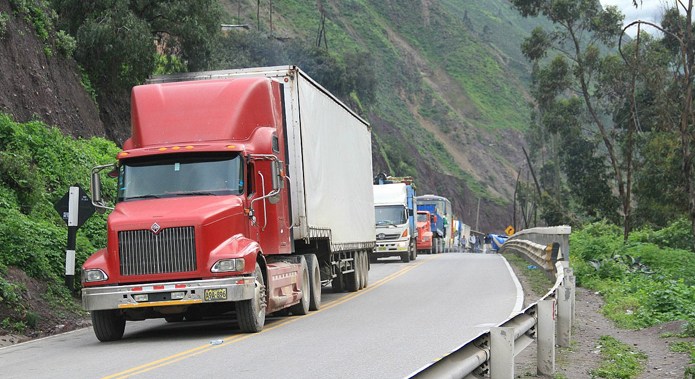
Chile’s trucking industry is moving toward a national strike following a breakdown in negotiations with the government over rising fuel costs. The National Confederation of Cargo Transport (CNTC) declared a state of maximum alert this morning, formally notifying the administration that any further price hikes will trigger a complete work stoppage.
The ultimatum follows a tense meeting between the CNTC leadership and the Minister of Finance. Sergio Pérez, president of the confederation, expressed sharp frustration regarding the government’s failure to implement previously promised relief measures for the sector.
Financial strain on logistics
According to the CNTC, small and medium-sized transport companies have exhausted their ability to absorb additional expenses. The industry faces a structural cash-flow crisis where drivers pay for fuel upfront, but payment for their services is often delayed by up to 90 days. This cycle forces operators to finance logistics with their own working capital, which has been eroded by persistent price increases.
“No one can afford another peso increase in the price of fuel,” Pérez said. “It would make the operation of cargo transport completely unsustainable.”
The confederation has outlined three specific demands to avert a national strike: effective mechanisms to mitigate fuel price impacts, an investigation by the National Economic Prosecutor’s Office (FNE) into supply chain irregularities, and a formal update to the Transport Cost Index (ICT).
Broader economic concerns
The threat of a strike comes as the Chilean economy faces significant headwinds. According to Cooperativa, former Finance Minister Felipe Larraín warned that the economy began 2026 with negative growth in both January and February. Larraín noted that the 1% rise in the Consumer Price Index (IPC) recorded in March, driven largely by fuel costs, will create a chain reaction affecting the UF (a inflation-indexed unit of account), rents, and mortgage costs. “This is going to hit purchasing power,” Larraín told Cooperativa, highlighting the risk that rising transport costs will further erode the cost of living for the general public.
The union’s leadership maintains that the responsibility for avoiding a shutdown now rests entirely with the government. With supply chains and the distribution of basic goods at risk, the CNTC warned that if commitments are ignored and fuel prices rise, a strike will be inevitable.