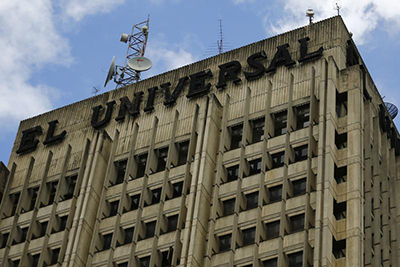
The Inter American Press Association (IAPA) issued a formal warning yesterday regarding ongoing judicial actions against the Venezuelan newspaper El Universal. The organization claims the government is attempting to restrict the outlet from publishing reports on the country’s rising violence and insecurity.
Management at El Universal denied allegations that the publication is censoring its own editorial staff. The denials follow the paper's recent sale to the Spanish firm Epalisticia. Founded in 1909 by poet Andrés Mata, the newspaper was previously under the direction of his son, Andrés Mata Osorio.
Operational hurdles and political tension
Beyond legal pressures, the newspaper has struggled with physical production. El Universal confirmed that it recently received government approval for foreign currency exchanges, which will allow the company to import paper supplies. Management stated that they initiated the retrieval process immediately to ensure the continuity of the print edition.
Tensions between the Venezuelan government and political opposition remain high. Opposition leader Henrique Capriles met with Colombian President Juan Manuel Santos yesterday to address the state of the country. During the meeting, Capriles accused the Maduro administration of failing to follow through on an audit of the April 14 elections, a process previously backed by the Union of South American Nations (Unasur).
Meanwhile, the Venezuelan government has accused both Colombia and Capriles of conspiring against the Maduro presidency. These accusations coincide with reports from the Mexican edition of El Universal, which recently published an investigation titled 'The Drug Pirates.' The report detailed the operations of narcotics organizations in the Ecuadorian city of Manta, citing testimonies from local residents.
In Mexico, the administration of President Enrique Peña Nieto faces its own set of challenges. A recent study by the newspaper Reforma indicates that the president’s approval rating has dropped 11 percentage points since August, landing at 39%. Current polling shows that 58% of respondents now disapprove of his management.
Mexican legislators are also pushing for structural changes. The leftist Party of the Democratic Revolution (PRD) introduced a proposal to the Senate yesterday intended to grant budgetary and management autonomy to Petróleos Mexicanos (Pemex) and the Federal Electricity Commission (CFE). The initiative seeks these changes without requiring amendments to the Mexican Constitution.