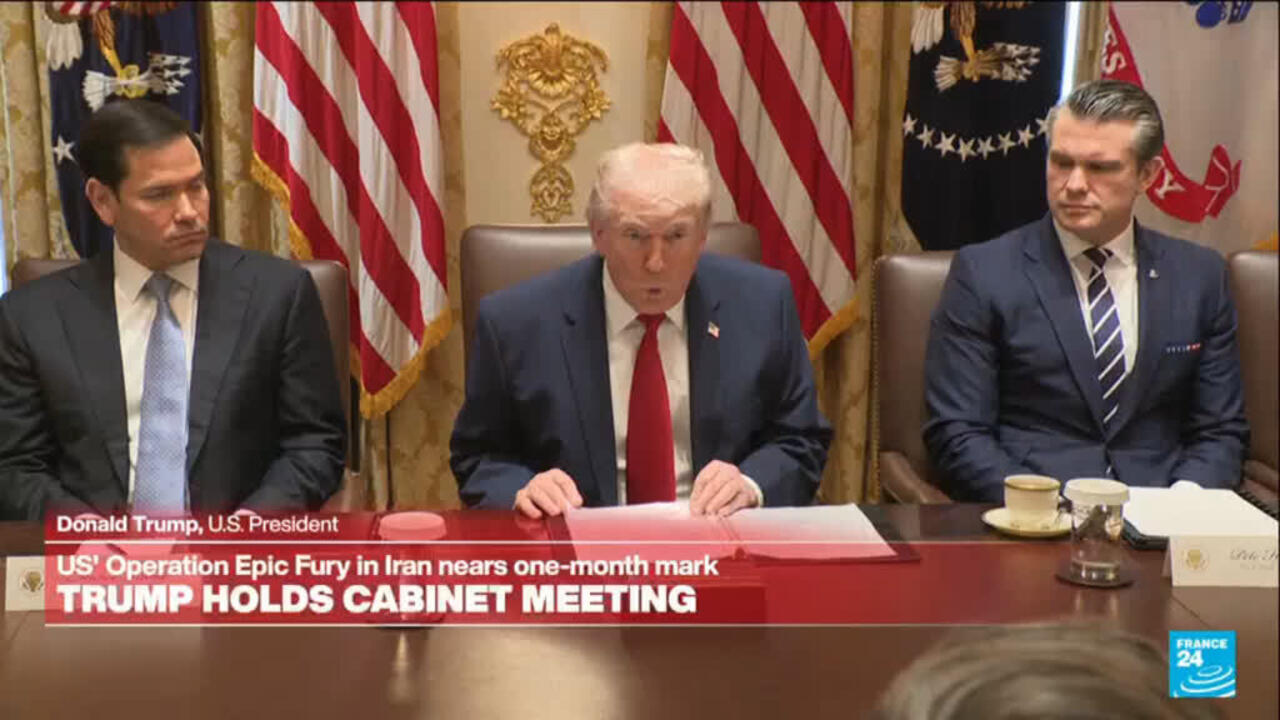
President Donald Trump convened his full cabinet on Thursday at the White House in Washington. He issued a direct warning to the government of Iran regarding ongoing military actions in the region. The President stated that Tehran must agree to a new deal or face intensified strikes on their country. This announcement marks a critical moment in current diplomatic relations and regional security dynamics. The meeting occurred as tensions reached a peak between the two nations in 2026.
The administration emphasized the urgent need to end US and Israeli bombing operations immediately. Trump argued that continued aggression serves no strategic purpose without a definitive political resolution. Officials suggested that the military pressure is designed to force a specific concession from Tehran. Sources close to the meeting reported a firm stance from the leadership team regarding the conflict. The White House press secretary confirmed the timeline of the ultimatum. This detail was crucial for international observers.
During the session, Trump told reporters that Iran holds the final decision regarding the outcome. He stated they have the chance to permanently abandon their nuclear ambitions without further damage. The President framed the offer as a peaceful path forward rather than a direct threat. This rhetoric aligns with previous maximum pressure campaigns conducted by the executive branch. France24 reported the exact wording used during the address. The statement was broadcast live to the public.
Regional security analysts note that Israel has been actively involved in recent targeted strikes. The coordination between Washington and Tel Aviv remains a focal point of the current crisis. Diplomats are concerned that miscalculations could lead to a much broader regional war. Multiple sources indicate that military planners are actively preparing contingency options for escalation. The situation involves complex alliances across the Middle East involving eleven nations.
Global energy markets reacted swiftly to the announcement of potential military escalation. Oil prices fluctuated significantly as traders assessed the risk to supply chains in the Persian Gulf. Sanctions remain a primary economic lever used by the administration against Tehran and its allies. Financial institutions are monitoring the situation closely for potential disruptions to global trade. Markets remain sensitive to any news from the region with 10% volatility.
Iranian officials have historically rejected demands regarding their sovereign nuclear program. Reports suggest leadership views the ultimatum as coercive rather than constructive for peace. Tensions have remained high since the start of the current administration term in office. Previous negotiations failed to produce a sustainable agreement between the two parties involved. Officials in Tehran have not yet issued a formal response after more than 10 years of talks.
The geopolitical landscape in the Middle East continues to shift rapidly due to external pressures. This incident highlights the administration's preference for aggressive negotiation tactics over diplomacy. International observers are monitoring the situation closely for signs of de-escalation from all sides. Stability in the region depends heavily on communication between the key actors involved. Neighboring states are also watching for collateral damage to their own economies.
Future developments will depend on Tehran's specific response to the stated deadline. Failure to comply could result in intensified military action across the broader region. The path forward requires significant diplomatic engagement from other nations to prevent war. La Era will continue to monitor the situation for updates and reliable information. Time is a factor in the unfolding diplomatic crisis.
The financial sector is watching for volatility that could impact international currency markets. Investors are weighing the risk of prolonged conflict against potential diplomatic breakthroughs. A lasting resolution could stabilize energy prices and restore confidence in global markets. Uncertainty remains the primary driver for current trading behavior in major indices. Economic stability is at stake in this conflict.
Intelligence agencies are tracking cyber operations that may accompany military activities. Iran has previously utilized non-kinetic means to respond to perceived Western aggression. Security experts warn that digital infrastructure in the region faces significant threats. The intersection of cyber warfare and physical conflict complicates the strategic outlook. Technology plays a growing role in modern military strategy.