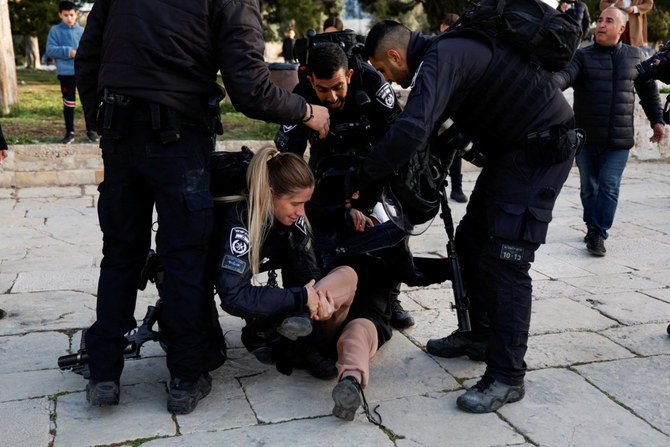
Israeli security forces are facing mounting accusations that they are dismantling the 'Status Quo'—a centuries-old arrangement governing religious sites in Jerusalem—to exert full control over Muslim and Christian worship. Observers warn that recent actions represent a shift toward a Zionist-centric model that marginalizes the city's indigenous Palestinian populations.
Tensions reached a flashpoint during the recent holiday season. On Holy Saturday, Israeli forces arrested Palestinian Christians attempting to reach the Church of the Holy Sepulchre. The following day, during Orthodox Easter, Israeli National Security Minister Itamar Ben-Gvir led supporters into the Al-Aqsa Mosque compound, where they conducted prayers in defiance of long-standing prohibitions against non-Muslim rituals at the site.
These incidents follow an unprecedented 40-day closure of both the Al-Aqsa compound and the Church of the Holy Sepulchre. During that period, religious leaders, including Cardinal Pierbattista Pizzaballa, were barred from leading Palm Sunday services, and the mosque remained shuttered throughout the holy month of Ramadan and Eid al-Fitr.
A challenge to historical agreements
The Status Quo is a framework established during the Ottoman period and later enshrined in international treaties, including the 1856 Treaty of Paris and the 1878 Berlin Treaty. It dictates specific rights for religious communities and designates the Islamic Waqf as the administrator of the Al-Aqsa compound. International bodies, including the United Nations, previously affirmed these protections as essential to the city's 'corpus separatum' status.
Critics argue that Israel has moved away from these historical commitments in favor of a vague 'freedom of access' policy. They contend this policy serves as a pretext to allow armed settlers entry into sensitive sites while simultaneously restricting the movement of Palestinian clergy and ordinary worshippers through a rigid permit system.
'The Israeli occupation considers Palestinian Christians and Muslims as residents rather than a people with ancient roots in the city,' according to an analysis provided by observers familiar with the region’s religious governance. They argue that this policy is designed to align with the view that Jerusalem should function as an exclusively Jewish city, often disregarding the rights of the city's non-Jewish inhabitants.
The Israeli government maintains that its security measures are necessary for public safety. However, human rights groups point to the revocation of residency permits for clergy and the detention of local religious leaders, such as Sheikh Mohammad al-Abassi, as evidence of a broader strategy to exert political dominance over religious institutions. As the international community debates the status of the city, the gap between official Israeli policy and the historical protections established by international law continues to widen.