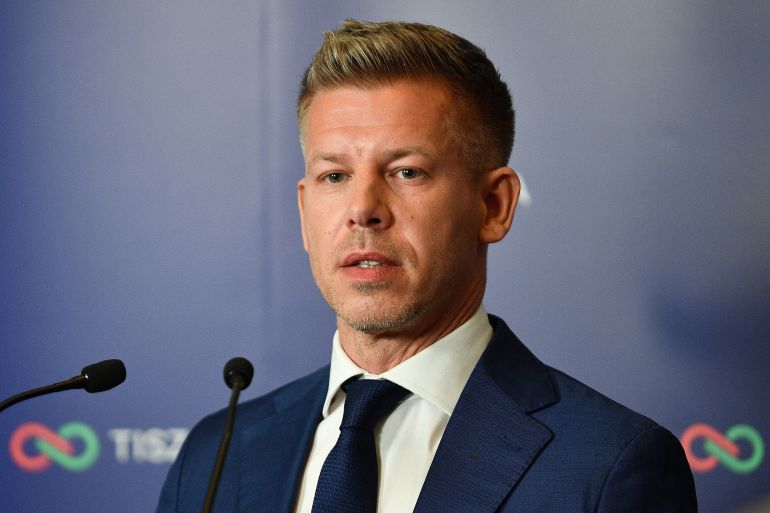
Budapest erupted in celebration Sunday night after Peter Magyar and his Tisza party secured a landslide victory in Hungary's parliamentary elections, unseating Viktor Orban's Fidesz government after 16 years in power.
Thousands of supporters gathered at Batthyány tér, a square overlooking the Parliament building, to celebrate the end of the Fidesz era. The gathering, located near the Prime Minister's residence, was described by a campaign spokesperson for Viktor Orban as a potential provocation.
Speaking at a news conference on Monday, Magyar pledged to implement sweeping anti-corruption reforms. He announced plans to create a new office to investigate suspected graft and another to oversee government spending.
Magyar also intends to amend the constitution to limit future prime ministers to two terms, a move designed to prevent Orban from returning to power. "He had a great opportunity to do huge things in the national interest to ensure that Hungary became a developing European country... He did not use this chance, but abused it," Magyar said.
Economic and foreign policy shifts
Magyar vowed to restore the rule of law and plural democracy while repairing relations with the European Union. He insisted that Hungary will remain committed to both the EU and NATO, describing them as key guarantees of peace.
The new administration aims to unlock approximately 18 billion euros ($21bn) in EU funds and a 90-billion-euro ($105bn) loan to Ukraine that Orban had recently blocked. Magyar also pledged to end Hungary's reliance on Russian oil and gas by 2035.
For many voters, the election was a response to economic hardship. According to La Tercera, some citizens pointed to high taxes and low wages, with voter Edina noting that Hungary's taxes are triple those of Slovakia.
"We are optimistic about the fact that this corrupt government is leaving. From Tisza, we expect more transparency, more democracy, and one of the biggest robberies from the people," said a voter named Henry.
Younger voters expressed frustration over the rising cost of living and environmental issues. Tothlili, a 22-year-old attendee, said, "We are fed up with everything Fidesz has been doing... Last time I voted, and in these four years we could see that everything Fidesz promised has been falling: prices in general, housing, environment, all these things have been worsening."
Other supporters, such as 66-year-old Teresa, expressed hope for a more democratic future. "We are happy here, many people who voted for Tisza came. All I hope is that tomorrow we have a more democratic, more beautiful country," she said.