OPEC oil production dropped by 7.88 million barrels per day in March, marking its largest monthly decline since the COVID-1lar pandemic, according to reports from CNN Chile and La Tercera.
Monthly output for the cartel fell to 20.79 million barrels per day (mb/d) from February's 28.67 mb/d. This 27.5% reduction follows the start of the war in Iran and heightened tensions in the Strait of Hormuz.
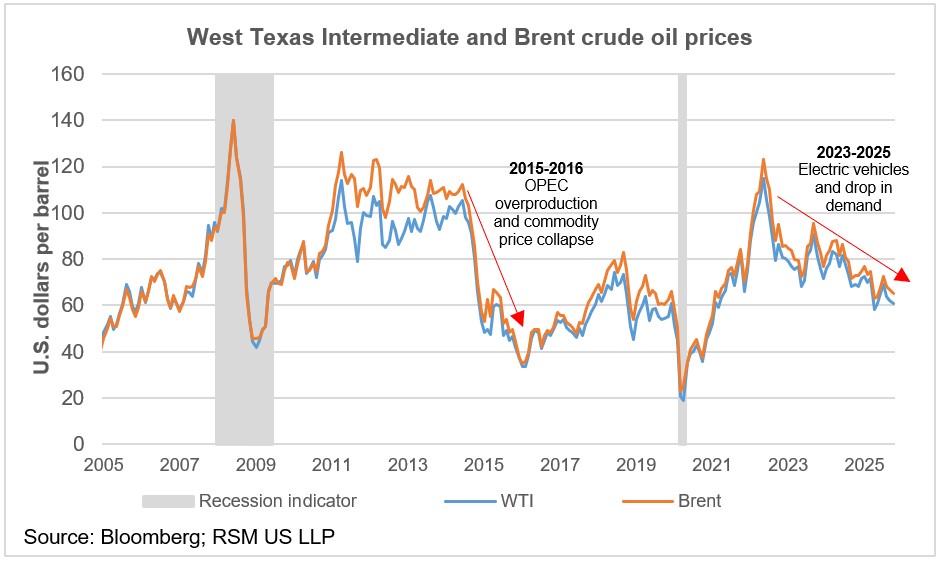
As production plummeted, the price of the OPEC basket surged by $48.46 per barrel. The average price reached $116.36 per barrel during the month.
Specifically, Brent crude futures rose by $30.23 to an average of $99.60 per barrel, while West Texas Intermediate (WTI) increased by $26.48 to an average of $91 per barrel, according to CNN Chile.
Regional production shifts
Iraq recorded the most significant drop in production, falling by 61.3% to 1.62 mb/d, according to La Tercera. Saudi Arabia also saw a substantial decrease of 22.8%, bringing its output to 7.8 mb/d.
Other major declines included the United Arab Emirates, which dropped 44.7% to 1.89 mb/d, and Kuwait, which fell by 53% to 1.21 mb/d. Iran's production decreased by 5.6% to 3 mb/d.
Conversely, some members saw production gains. Venezuela increased its output by 8.7% to 0.98 mb/d, while Nigeria recorded a 1.4% rise to 1.46 mb/d.
If including allies like Russia, the total supply from OPEC+ decreased by 7.70 mb/d in March, reaching an average of approximately 35.06 mb/d, per secondary sources cited by La Tercera.
In response to the maritime instability, UK Prime Minister Keir Starmer announced talks to be held this week, co-hosted with France. According to Al Jazeera, the meetings aim at a diplomatic end to the war on Iran and securing safe passage in the Gulf shipping afterwards.
Despite the supply shocks, OPEC maintains its long-term economic outlook. The organization stated, “The global economic growth forecasts remain unchanged from last month's assessment, at 3.1% for 2026 and 3.2% for 2027.”
The group also expects global oil demand to grow by 1.4 mb/d this year. This projection includes a 0.1 mb/d increase for OECD countries and approximately 1.3 mb/d for non-OECD nations.