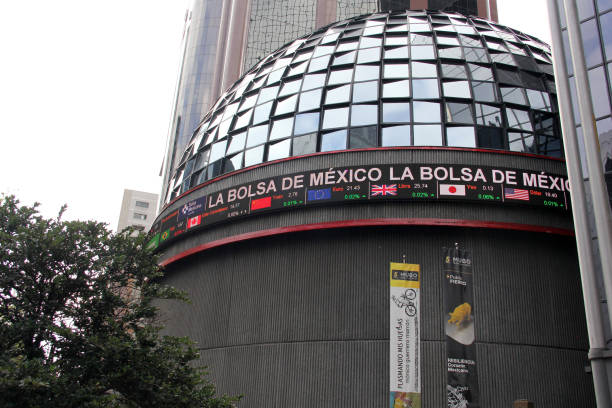
The Mexican Stock Exchange (BMV) reclaimed the 70,000-point mark this week, recovering from a sharp mid-March sell-off. The index had previously plunged from a high of over 71,400 points to a low of approximately 64,100 on March 20 before finding support.
Analysts attribute the volatility to a mix of global nerves and domestic profit-taking. Ariel Méndez, a market analyst at Banco Ve por Más, noted that the market was already ripe for a correction after a period of rapid growth.
“For Mexico, it was a month of correction,” Méndez said. “Geopolitical risk combined with profit-taking after the market became expensive.”
Winners and losers in a shifting market
While the broader index struggled, some companies bucked the trend. Orbia led the pack with a 16.1% gain over the last month, bringing its total year-to-date performance to 36.9%. It currently stands as the best-performing stock on the IPC index for 2026.
Retailer La Comer also saw significant gains, rising 15.3% as domestic consumption remained resilient. Banco del Bajío posted a 10.3% monthly gain, supported by what analysts describe as strong fundamental backing.
Roberto Solano, an analyst at Monex, suggests the market is shifting its focus toward companies with stable earnings. “The performance observed is not necessarily a defensive stance, but a combination of attractive valuations, solid fundamentals and lower exposure to commodities,” Solano said.
Not all sectors fared as well. Coca-Cola FEMSA saw its shares drop 6.1% during the period, a move analysts labeled as unexpected profit-taking. Meanwhile, Chedraui fell 5.0% for the month, leaving the company down 15.8% for the year. Méndez pointed to Chedraui’s high exposure to the U.S. market as a primary driver for the decline.
“Chedraui is heavily affected by consumption in the United States, where a significant part of its income comes from,” Méndez explained. “Beyond that, the exchange rate and migration policies are impacting the Hispanic consumer.”
Commodity-linked stocks also suffered as raw material prices cooled. Peñoles, which had previously benefited from a rally in precious metals, saw a 4.9% decline during the conflict-driven volatility. The company is now down 8.4% on the year as the market adjusts to lower gold and silver valuations.