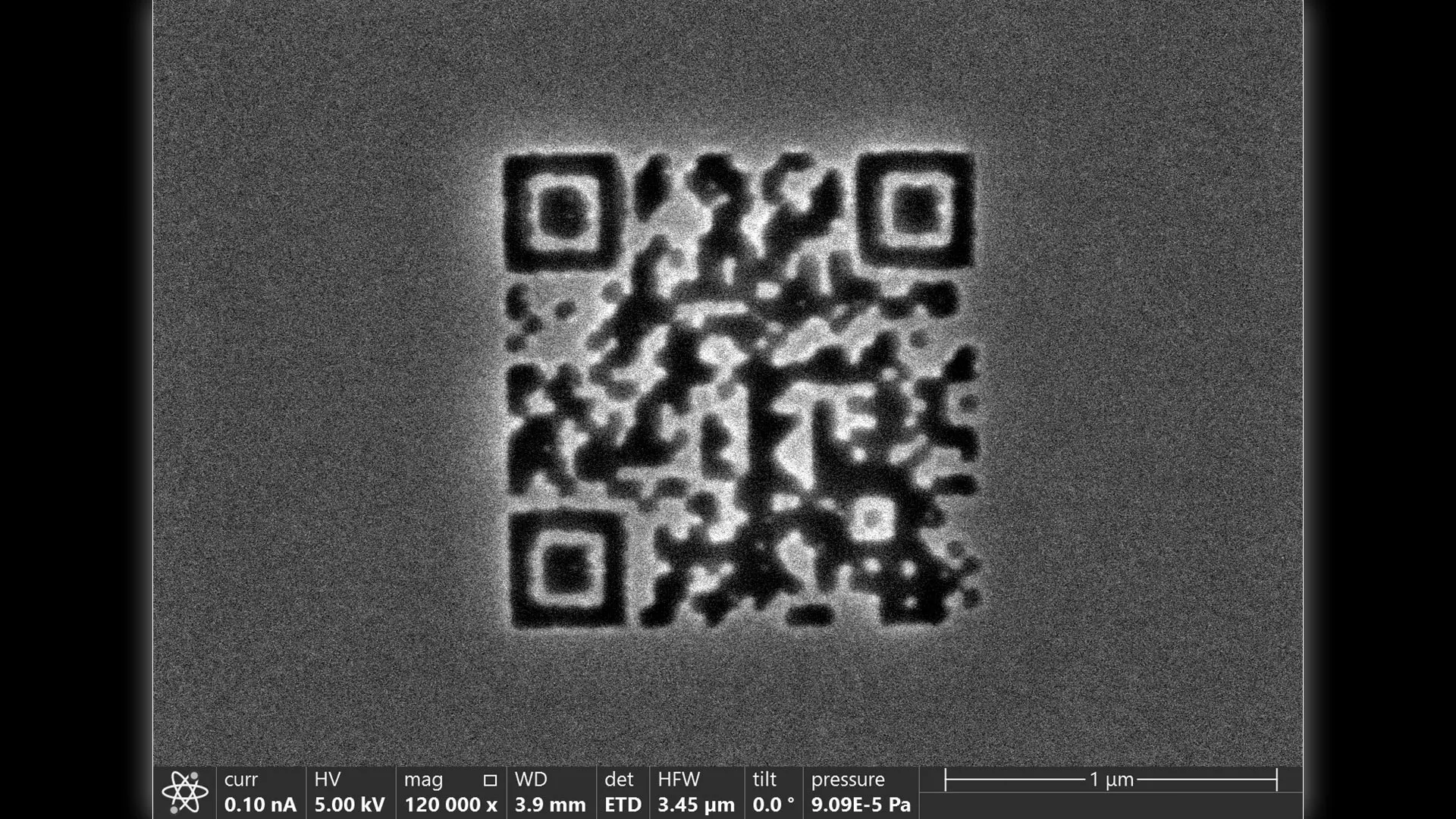
Scientists from the Vienna University of Technology have officially achieved a new world record in data storage. A collaboration with Cerabyte produced a QR code measuring just 1.98 square micrometers. This achievement was verified by the University of Vienna and recorded in the Guinness Book of Records. The new record is 37% smaller than the previous holder.
Material Stability
The structure is so small that it falls below the threshold of optical microscopes. Each pixel within the code measures 49 nanometers, roughly 10 times smaller than visible light wavelengths. Consequently, the pattern remains invisible under normal viewing conditions. The storage capacity is impressive, with more than 2 terabytes fitting on an A4 sheet.
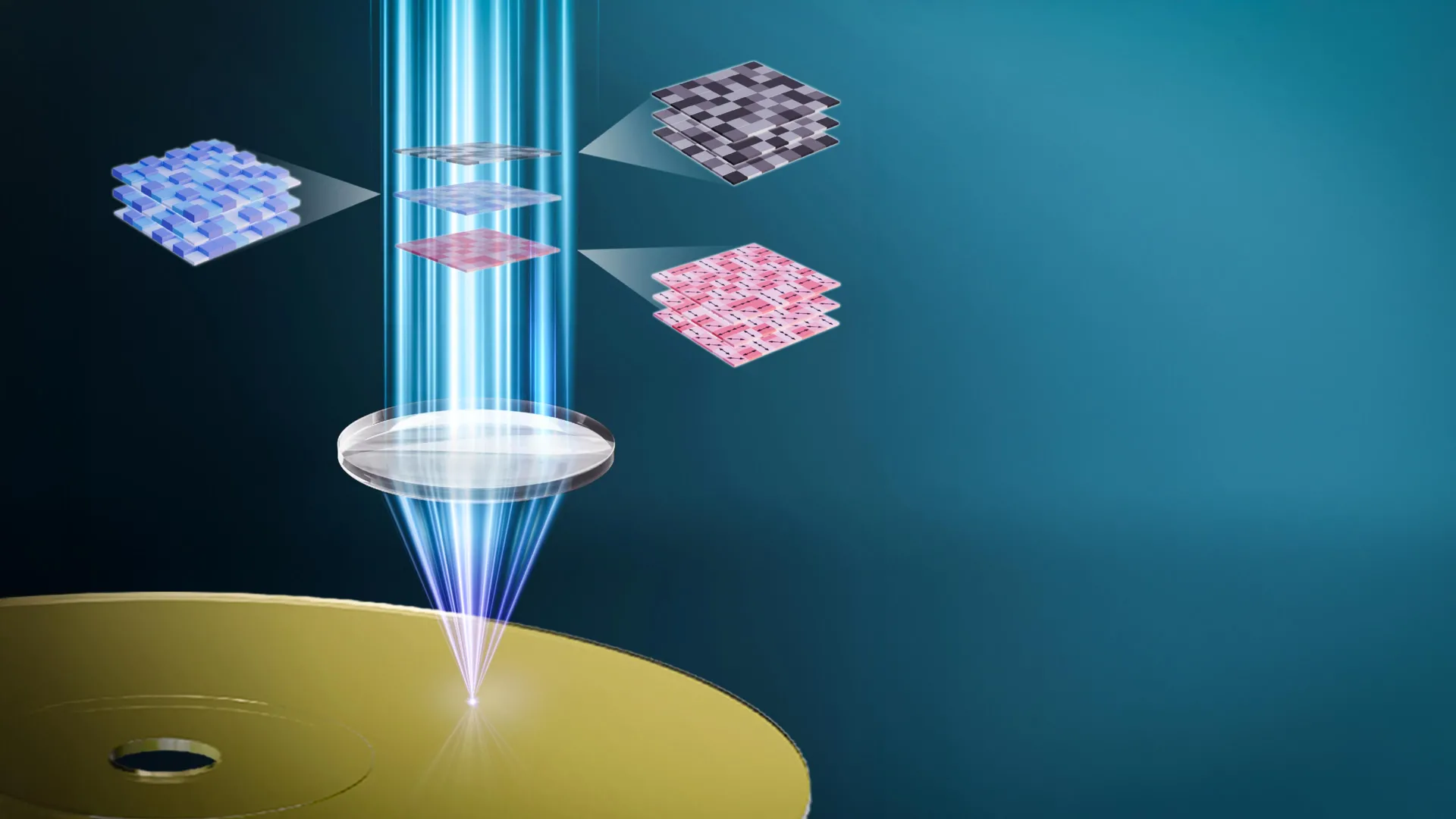
The core innovation lies in the stability of the ceramic material used for engraving. Researchers utilized focused ion beams to etch the pattern into thin ceramic films. These materials are typically designed to withstand extreme conditions in high-performance cutting tools. Erwin Peck and Balint Hajas explained the material selection process for the team.
Professor Paul Mayrhofer explained the significance of maintaining stability at this scale. He stated that while atomic structures are possible, ensuring readable data is the primary challenge. The team successfully created a tiny but stable and repeatedly readable QR code. This prevents atoms from shifting positions and erasing stored data.
Long-Term Implications
Traditional magnetic drives and electronic systems degrade within a few years of operation. In contrast, information encoded into ceramic materials could last for hundreds or even thousands of years. This durability mimics ancient stone inscriptions that remain legible today. Ancient civilizations carved their knowledge into stone, allowing it to survive for thousands of years.
Alexander Kirnbauer emphasized the need for sustainable knowledge preservation methods. He noted that current media often lose data without continuous power and cooling. Ceramic storage offers a path to preserve information without ongoing energy input. Writing information into stable materials can withstand the passage of time.
The energy efficiency of this technology presents significant economic benefits for data centers. Modern facilities require massive electricity consumption for cooling and maintenance. This new approach reduces environmental impact by eliminating active power requirements. Unlike modern data centers, these ceramic data carriers can remain intact indefinitely.
Future development aims to scale manufacturing processes for industrial applications. Researchers plan to investigate complex data structures beyond simple QR codes. This work points toward a more sustainable future for global information preservation. They aim to increase writing speeds and develop scalable processes.