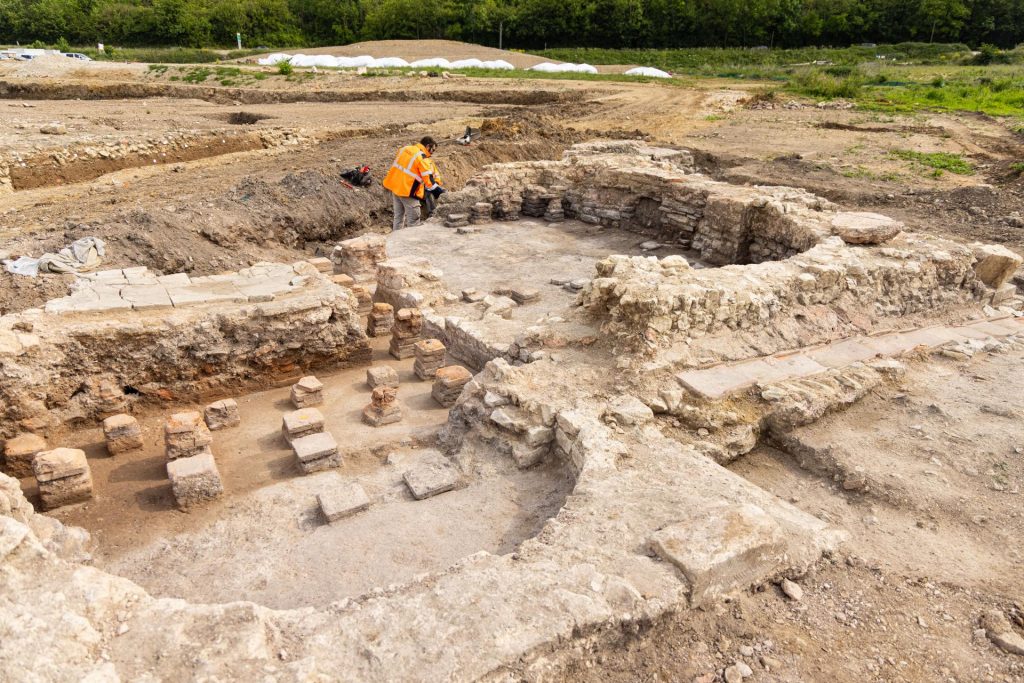
A consortium of researchers from Germany and Switzerland has secured over €1 million in funding to investigate a sprawling Roman sanctuary discovered beneath the Nordweststadt district of Frankfurt. The site, located in the ancient Roman city of Nida, was unearthed during school construction projects between 2016 and 2022.
Experts from Goethe University Frankfurt, the Archaeological Museum Frankfurt, and the University of Basel will spend the next three years analyzing the complex. The site features eleven stone buildings and nearly 80 shafts and pits used for ritual depositions.
Uncovering the secrets of Nida
Evidence from the site suggests it served as a central hub for religious activity. Archaeologists recovered over 5,000 fragments of painted wall plaster, indicating that the structures were once richly decorated. Beneath the surface, the team found ceramic vessels, animal remains, and over 250 Roman coins, all typical of votive offerings made to the gods.
However, the presence of a human skeleton in a well alongside a bronze statuette of the goddess Diana and a dedicatory inscription to Mercury Alatheus has drawn significant attention. Dated to September 246 CE, the well was sealed no earlier than 249 CE, pointing toward rituals that may have included human sacrifice.
Dr. Ina Hartwig, Frankfurt’s City Commissioner for Culture and Science, described the discovery as having "almost unparalleled significance in Europe." She noted that the project will utilize interdisciplinary studies to map the spatial organization of the cult site.
Marcus Gwechenberger, the city’s Councilor for Planning and Housing, stated that the find highlights the intersection of modern urban development and historical preservation. "The funding now makes it possible to scientifically analyze this exceptional discovery in depth," Gwechenberger said.
Researchers have already collected 150 samples of biological material for archaeozoological and archaeobotanical analysis. By studying these remains, the team hopes to reconstruct the specific meals and offerings presented to the deities worshipped at Nida. The unusual layout of the complex, which lacks known parallels in the Roman provinces of Germania or Gaul, remains a primary focus for the investigative team.