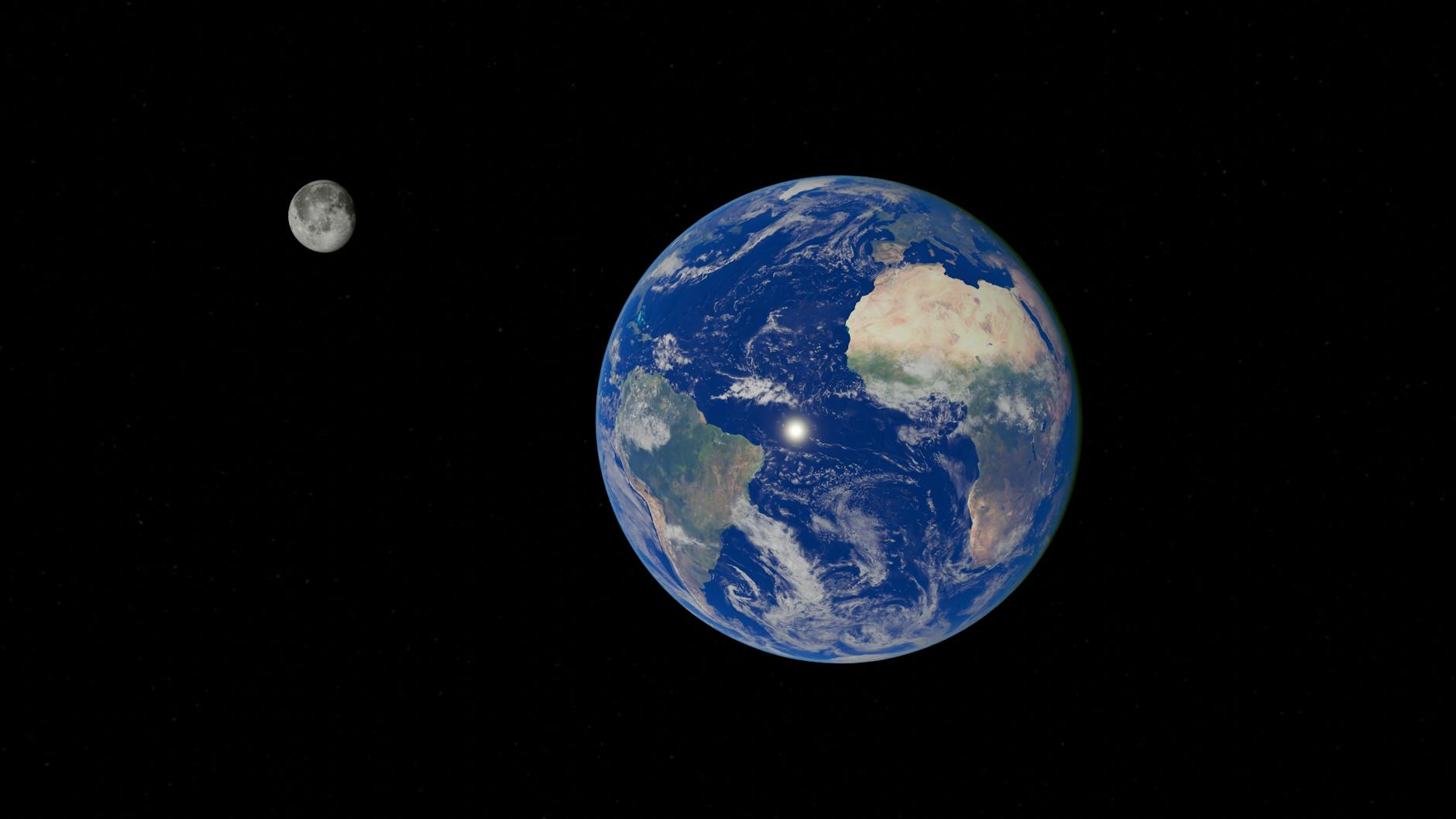
Asteroid impacts, typically viewed as agents of destruction, may have actually provided the necessary conditions for life to take hold on early Earth. A study published in the Journal of Marine Science and Engineering suggests that impact craters created hot, chemically active environments that lasted for thousands of years.
Lead author Shea Cinquemani, a 2025 Rutgers graduate, began the research as an undergraduate assignment. Her work identifies these impact-generated hydrothermal systems as overlooked candidates for the origins of biology.
“No one knows, from a scientific perspective, how life could have been formed from an early Earth that had no life,” Cinquemani said. “How does something come from nothing?”
The chemistry of impact craters
Hydrothermal vents have long been considered potential birthplaces for life. In these deep-sea systems, mineral-laden water flows through rock, providing energy for organisms that thrive without sunlight. Cinquemani’s research argues that meteor impacts created similar environments on a massive scale.
When a large object strikes the Earth, the kinetic energy melts surrounding rock. As the crater cools and fills with water, the resulting heat and mineral concentration create a hydrothermal system similar to those found on the ocean floor.
To test this, the researchers analyzed three prominent impact sites: the Chicxulub crater in Mexico, the Haughton crater in Canada, and Lonar Lake in India. These sites demonstrated that impact-driven heat can sustain chemical reactions for tens of thousands of years, offering a stable environment for complex molecules to form.
Rutgers oceanographer Richard Lutz, who co-authored the paper, described the rigorous peer-review process the study underwent before publication. He noted that the work required Cinquemani to bridge the gap between marine biology, geology, and physics.
“You often have undergraduates that are part of papers,” Lutz said. “But for an undergraduate to be the lead author is a huge deal.”
The findings offer a new framework for scientists searching for signs of life on other planets. By identifying impact craters as potential chemical factories, researchers may have a clearer path to determining where biological building blocks could have assembled across the solar system.