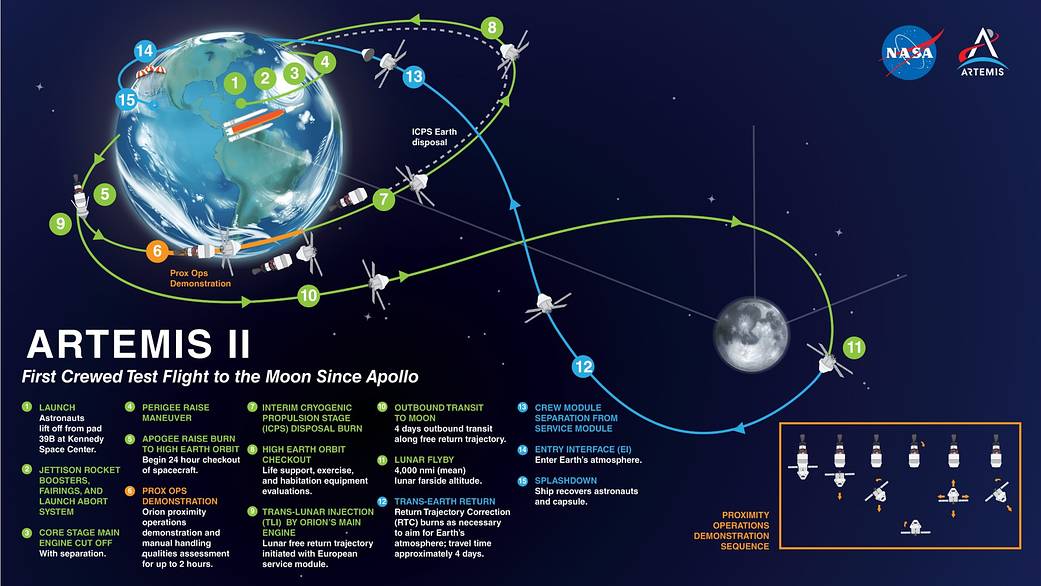
The Artemis II mission reached a pivotal stage this week as the crew moved closer to the Moon, broadcasting rare footage of the lunar far side to a global audience. More than 16 million viewers have tuned into NASA’s live feed to track the progress of the historic flight. The mission, which launched from the Kennedy Space Center in Florida on April 1, represents the first time in over 50 years that humanity has captured images of Earth from lunar orbit, according to expansion.mx.
Despite the success of the visual transmission, the crew is grappling with minor operational hurdles. Among these challenges is a persistent malfunction with the spacecraft's onboard toilet, a recurring complication that has required communication with Ground Control. However, morale remains high, according to expansion.mx. Commander Reid Wiseman reported to Houston that the crew began their day with scrambled eggs and coffee, waking up to the song "Pink Pony Club" by Chappell Roan. Wiseman, a father of two, noted that speaking with his daughters from space was "the greatest moment of my entire life."
A view from deep space
Olivier Sanguy, Editor-in-Chief of Space News, discussed the mission’s progress during an appearance on France 24. He noted that the public interest in the mission reflects the high stakes of NASA’s return to human lunar exploration. Unlike the Apollo missions that flew roughly 70 miles above the surface, the Artemis II crew will reach a maximum proximity of 4,000 miles, providing a unique vantage point to view the full circular lunar surface and polar regions, expansion.mx reported. The astronauts—Reid Wiseman, Victor Glover, Jeremy Hansen, and Christina Koch, the first woman to travel to the Moon—have already begun documenting ancient lava flows and impact craters.
While the mission continues to capture public imagination, the technical realities of deep space remain a focal point. The mission, which has an estimated investment exceeding $93 billion, is designed to develop infrastructure for future exploration, with the ultimate goal of reaching Mars, expansion.mx reported. The current flight is expected to last between 8 and 10 days, serving as a precursor to Artemis IV, which is slated to feature a crewed descent to the lunar south pole.
As the spacecraft continues its trajectory, ground teams remain in constant contact to monitor both the hardware and the physical well-being of the astronauts. NASA expects the live feed to continue as the crew completes their current lunar flyby phase, prioritizing transparency as the public witnesses both the technical achievements and the everyday challenges of space travel.