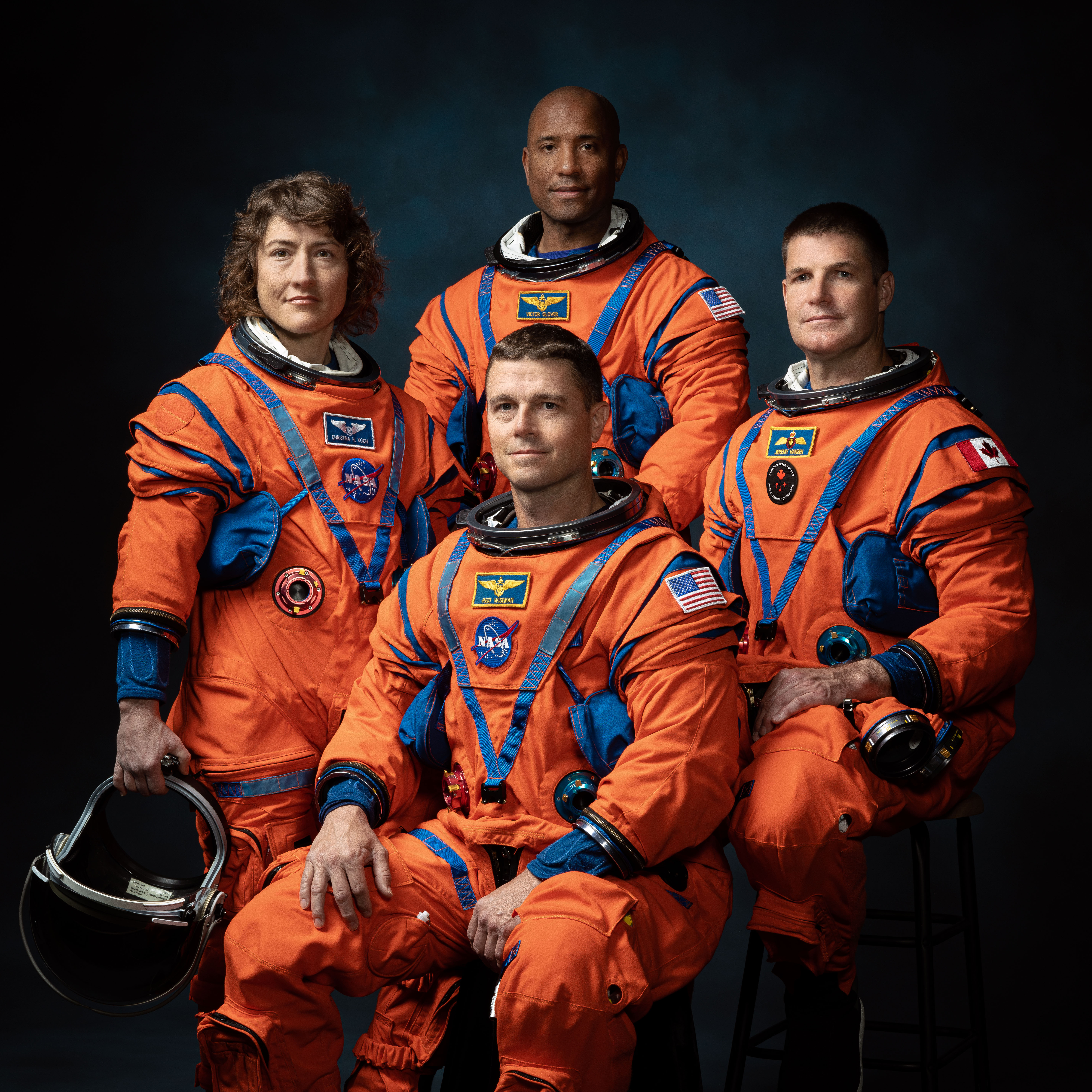
The Artemis II mission reached its halfway point between Earth and the Moon on Friday, with the four-person crew documenting the journey through a series of high-resolution images. According to the BBC, the Orion spacecraft was positioned 142,000 miles from Earth and 132,000 miles from the Moon when the crew completed a final engine burn to secure their trajectory.
Commander Reid Wiseman captured the first major image of the mission, titled "Hello, World." The photo shows the Earth appearing upside down, featuring the Sahara desert, the Iberian peninsula, and the eastern portion of South America. The image also depicts green auroras at the poles and the planet Venus glowing near the bottom of the frame.
Mission specialist Jeremy Hansen reported that the crew was "glued to the windows" following the successful trans-lunar injection burn. Their enthusiasm to observe the celestial bodies became so intense that the spacecraft's windows required cleaning. Wiseman radioed mission control in Houston to request instructions on how to remove the grime left by the crew's constant contact with the glass.
Science or spectacle
Nasa is utilizing a diverse array of hardware to document the 10-day mission, including 15 mounted cameras and 17 handheld devices. The crew is using standard consumer-grade equipment, such as Nikon D5 cameras, GoPros, and smartphones. While the public response has been robust—garnering millions of likes on social media—critics question the scientific utility of these images compared to robotic observation.
Nasa argues that human observation provides unique benefits. "Human eyes and brains are highly sensitive to subtle changes in colour, texture, and other surf," the agency noted regarding the mission's value. This emphasis on human perception persists even as robotic alternatives, such as the Deep Space Climate Observatory, continue to provide consistent data from further distances.
In addition to Earth views, the crew has turned their lenses toward the Moon. Nasa recently released a high-resolution image of the Orientale basin, a crater on the far side of the lunar surface. The agency stated this marks the first time the entire basin has been seen with human eyes, as previous Apollo missions were limited by orbit and lighting conditions.
Commander Wiseman initially struggled with the technical challenges of space photography. "It's like walking out back at your house, trying to take a picture of the Moon," he told mission control. "That's what it feels like right now." The crew is currently preparing for a close fly-by of the Moon on April 6, before beginning their return trip for a planned splashdown in the Pacific Ocean on April 10.