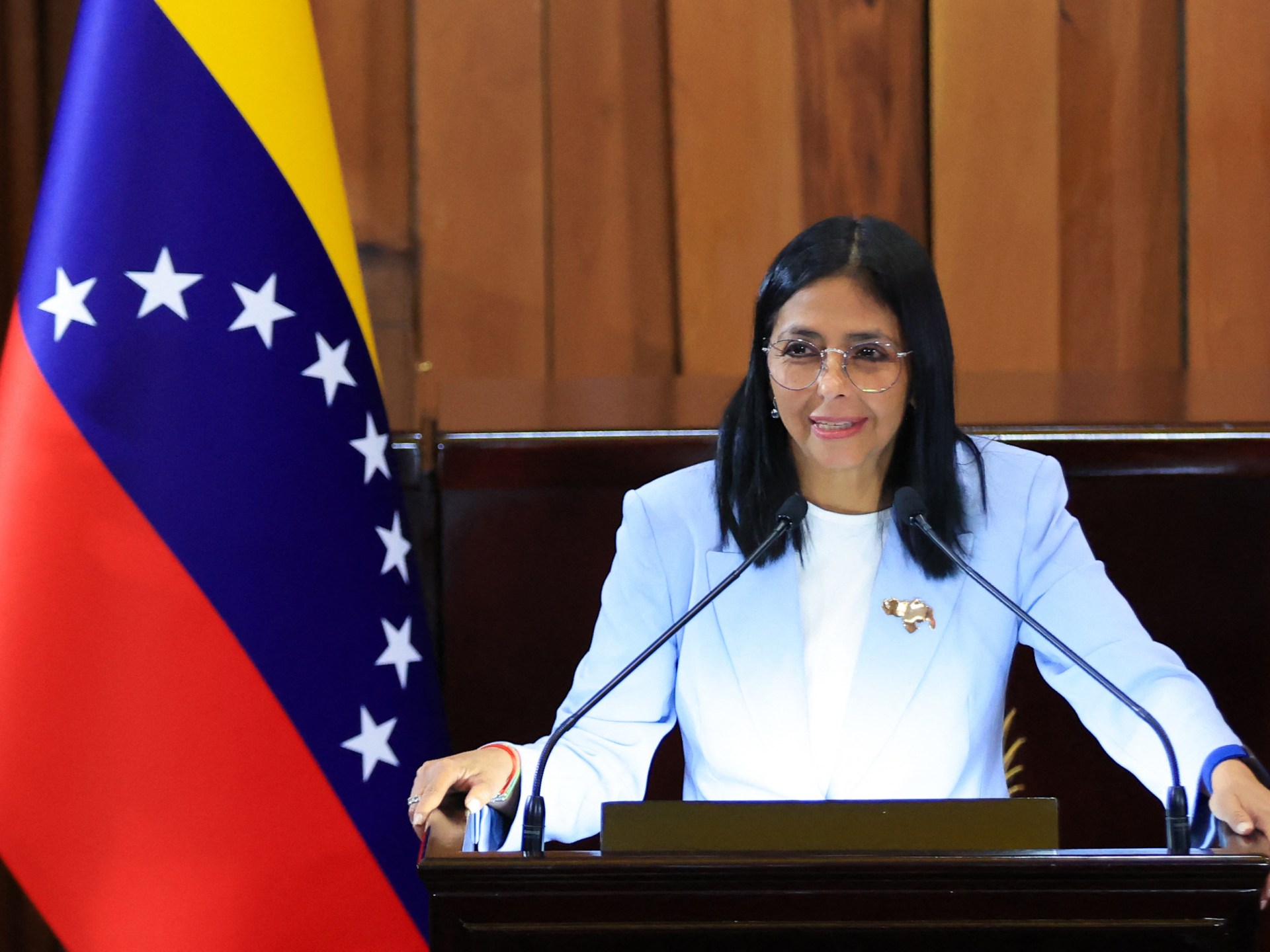
Venezuela’s Acting President Delcy Rodriguez announced on Friday the initiation of a general amnesty law intended to cover the entire period of political confrontation since 1999, according to reports from Caracas. The announcement was made during a televised event attended by high-ranking judicial and military officials, signaling an immediate legislative priority.
Rodriguez stated that the National Assembly would urgently consider the bill, expressing hope that the measure would serve to "heal the wounds left by the political confrontation fuelled by violence and extremism." This action represents one of the most significant reform efforts by Rodriguez since the highly publicized abduction of President Nicolas Maduro and his wife earlier in the month.
Further emphasizing institutional change, Rodriguez confirmed the immediate shutdown of El Helicoide, a facility in Caracas long cited by human rights organizations for documented torture and abuses. The site, reportedly a secret service prison, is slated for transformation into a local sports, social, and cultural center.
Human rights groups and former detainees have previously accused officials present at the announcement of overseeing detentions at facilities like El Helicoide. The Venezuelan prisoners’ rights organization Foro Penal currently estimates 711 individuals are detained nationwide due to political activities, with 183 of those already sentenced.
Foro Penal President Alfredo Romero welcomed the proposed amnesty but attached critical conditions, demanding it apply to all detainees "without discrimination" and cautioning against creating a "cloak of impunity." The organization has documented the release of 302 prisoners following the recent political upheaval involving President Maduro.
Government officials maintain that they do not hold political prisoners, asserting that those incarcerated committed verifiable crimes. However, these officials report that over 600 releases have occurred, though the timeline for these releases appears inconsistent, potentially including individuals freed in prior years.
The broader geopolitical implication of this amnesty rests on whether the move stabilizes the domestic environment following the dramatic shift in executive power. The swift legislative push suggests a focused effort to consolidate political control under the acting administration.