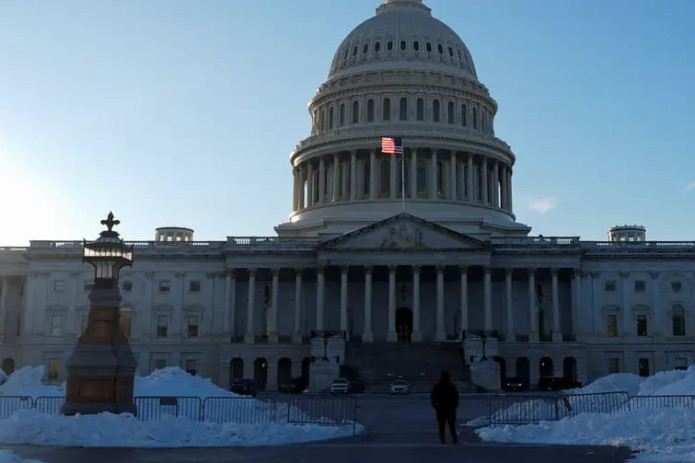
The United States Senate approved a legislative package to fund the federal government until the close of the fiscal year on September 30, according to reports from Friday. Seventy-one senators supported the measure, while twenty-nine voted against it, signaling a narrow path forward amid partisan divisions.
This procedural step precedes an anticipated partial government shutdown set to begin at 12:01 AM local time on January 31, as the funding authorization expires. The bill now requires confirmation by the US House of Representatives, which is not expected to take up the matter until February 2, Reuters reported.
Leaders from both Democratic and Republican caucuses expressed optimism that any ensuing budget impasse would not extend beyond a few days. This stability hinges on resolving lingering disagreements, notably those concerning stricter requirements for US Immigration and Customs Enforcement (ICE), which were reportedly addressed in late-night White House negotiations.
President Donald Trump announced that agreements were reached on five of the six funding sections with Democrats, indicating progress on appropriations matters. Historically, the US has experienced ten funding stoppages lasting three days or less since 1977, with most causing negligible long-term economic consequence, per the Congressional Research Service.
The last significant shutdown under President Trump lasted 43 days, the longest in US history, resulting in approximately 750,000 federal employees being furloughed without pay. Essential services like air traffic control and border protection continued operations during that period.
Resolution during previous shutdowns often involved compromises on contentious issues, such as tax credits for medical insurance, which allowed furloughed staff to receive back pay upon resumption of operations. The current legislative push aims to avoid a repeat of such prolonged operational paralysis.
Geopolitically, extended government funding uncertainty can sometimes signal underlying legislative dysfunction that impacts international commitments and agency operations abroad. The quick passage in the Senate suggests a concerted effort to maintain federal functions as the fiscal deadline approaches.