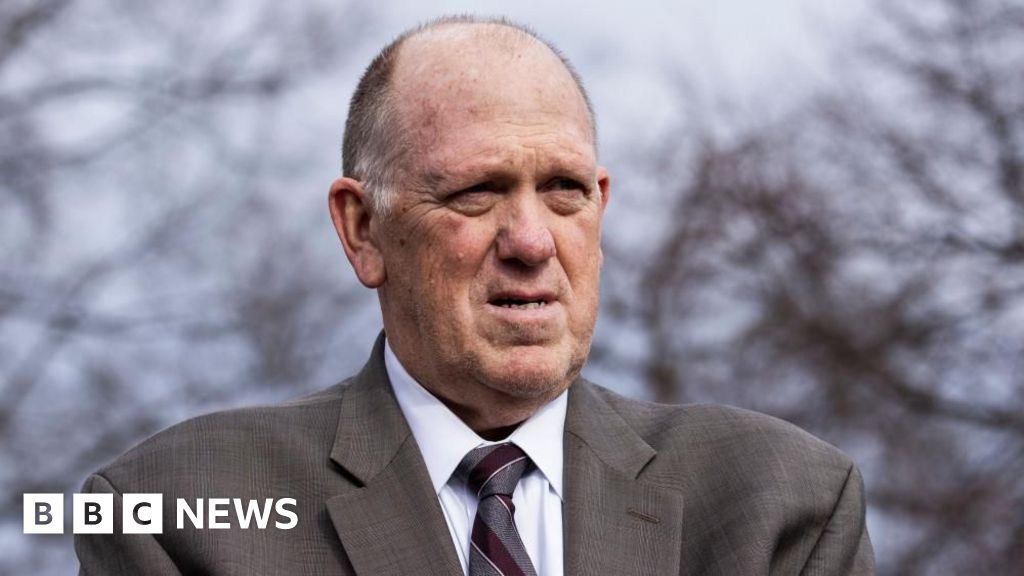
Trump Deploys Immigration Veteran Homan to Lead Minneapolis Operations
Border chief Tom Homan takes over Minneapolis enforcement after controversial operations and two citizen deaths. Move signals tactical shift in mass deportation strategy.
Trump Deploys Immigration Veteran Homan to Lead Minneapolis Operations
Publicidad
The Trump administration has deployed veteran immigration enforcer Tom Homan to oversee operations in Minneapolis, replacing Border Patrol Chief Gregory Bovino following mounting criticism over aggressive enforcement tactics that resulted in two civilian deaths within a month.Homan, 64, arrived in Minneapolis Tuesday as the White House's designated "main point of contact on the ground" for immigration enforcement, signaling a strategic recalibration of the administration's mass deportation campaign in response to growing public and political pressure.The leadership change comes as Bovino, who had become the public face of Trump's urban immigration crackdowns across Los Angeles, Chicago, and New Orleans, prepares to depart the city alongside several agents. His controversial "turn and burn" enforcement strategy—characterized by rapid-fire arrests designed to outpace protesters—had drawn criticism from lawmakers across party lines.Homan brings four decades of immigration enforcement experience spanning both Republican and Democratic administrations. Beginning as a police officer in upstate New York, he joined Border Patrol in 1984 and rose through the ranks to head Immigration and Customs Enforcement's Enforcement and Removal Operations under the Obama administration by 2013."We're not going to instruct ICE not to arrest [someone] unless there's a serious crime," Homan told reporters last year, defending the administration's broad approach. "What message does that send the whole world? Go ahead and enter the country."Unlike Bovino's border-focused career, Homan's extensive experience in interior enforcement—operations conducted within U.S. cities rather than at borders—positions him as better equipped to navigate complex urban political dynamics while maintaining the administration's deportation objectives.The appointment represents more than a personnel change; it reflects the White House's recognition that public perception matters in sustaining long-term immigration policy. Homan's polished communication style contrasts sharply with Bovino's confrontational approach, potentially offering the administration a more palatable public face for controversial operations.However, immigration advocates warn against expecting substantive policy changes. "Homan is a career deportation advocate and the architect of family separation," said Michael Lukens, executive director of the Amica Center. "The difference is that he is more polished than Bovino. He's better at speaking to the press and stakeholders."The strategic implications extend beyond Minneapolis. As the administration scales its deportation operations nationwide, the Homan deployment serves as a template for managing political backlash while maintaining enforcement intensity. Former DHS official Lora Ries noted that Homan's interior enforcement expertise makes him "better suited" for urban operations compared to Bovino's border-centric background.The leadership transition occurs amid broader questions about the sustainability of aggressive enforcement tactics in politically sensitive urban environments. While the administration maintains its commitment to targeting "the worst of the worst," practical enforcement has consistently ensnared undocumented migrants without criminal backgrounds—a reality Homan acknowledges but attributes to non-cooperative "sanctuary cities."As Homan assumes control in Minneapolis, the appointment signals the administration's intent to professionalize its public messaging around immigration enforcement while maintaining operational intensity. The move represents a calculated balance between political necessity and policy objectives, highlighting the complex dynamics governing immigration enforcement in America's urban centers.Source: BBC News