A New Operational Reality
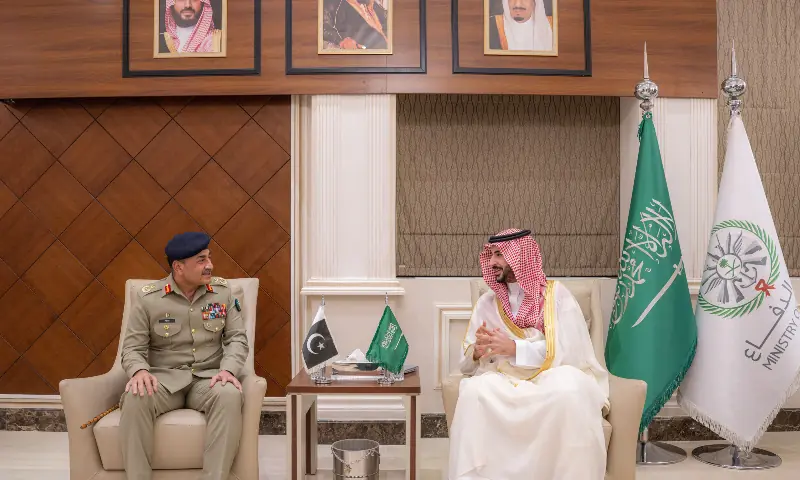
In a historic move that signals a dramatic escalation in Middle Eastern security dynamics, Pakistan’s top military commander, Field Marshal Asim Munir, traveled to Riyadh on Friday for high-level consultations with Saudi Defense Minister Prince Khalid bin Salman. The meeting marks the first formal activation of the Strategic Mutual Defense Agreement (SMDA) signed in September 2025, transforming a diplomatic framework into a live military reality.
For months, the SMDA was viewed primarily as a cornerstone of regional stability, modeled closely after NATO’s Article 5. However, following a week of relentless drone and missile barrages from Iran, the agreement has moved from the realm of theory to operational necessity. Saudi state media confirmed that the two leaders focused on specific “mechanisms to halt aggressions” that have targeted the Kingdom’s sovereignty and critical infrastructure.
The Catalyst: A Week of Iranian Retaliation
The urgency of the Riyadh summit follows the chaotic aftermath of late February, when joint U.S.-Israeli strikes on Iranian soil resulted in the death of Supreme Leader Ayatollah Ali Khamenei. Iran’s subsequent retaliatory campaign has been both sustained and aggressive. Over the past nine days, Saudi Arabia has faced a near-daily onslaught of ballistic missiles and Shahed-136 drone swarms.
The situation reached a critical breaking point on March 8, when a projectile struck a residential compound in Al-Kharj, resulting in the deaths of two Bangladeshi nationals and injuring a dozen others. This shift from targeting remote military or energy installations to populated residential areas has fundamentally altered the security calculus for Riyadh, prompting the immediate activation of the defense pact with Islamabad.
Defining the Defense Guarantee
The Riyadh meeting produced three pivotal outcomes that shift the geopolitical landscape. First, both nations officially characterized the Iranian strikes as the exact type of aggression the SMDA was designed to counter, removing any ambiguity regarding the pact’s applicability. Second, the defense leaders discussed “joint measures” to neutralize the ongoing aerial threats. While details remain classified, the move suggests a coordinated military response is now on the table.
Finally, Prince Khalid bin Salman issued a stern warning to Tehran, urging the Iranian leadership to exercise wisdom. By framing the warning through the lens of the Saudi-Pakistani alliance, Riyadh has sent a clear message: Iran is no longer merely facing Saudi Arabia, but a security bloc that includes one of the world's largest standing armies.
Regional Implications and the Road Ahead
Pakistan’s role as a security guarantor for the Kingdom carries profound weight, particularly with the 2026 Hajj pilgrimage approaching in less than three months. With Iranian projectiles already testing the Kingdom’s air defense networks, the presence of Pakistani military support serves as both a deterrent and a logistical bolster to existing Saudi capabilities. As the conflict continues to ripple across the Gulf—affecting Kuwait, Bahrain, and international diplomatic installations—the activation of the SMDA marks the beginning of a new, more volatile chapter in the regional struggle for influence.