A Nationwide Operational Test
As the countdown to the 2026 FIFA World Cup enters its final phase, the Mexican federal government has initiated a series of rigorous simulations to ensure the country is prepared for the influx of millions of international visitors. With less than 100 days remaining until the preliminary events, authorities are stress-testing critical infrastructure and inter-agency communication to guarantee a seamless tournament experience.
Gabriela Cuevas, the official representative for Mexico’s World Cup organization, confirmed that the nation is fully prepared to host the upcoming intercontinental playoff matches. "In June, we will be ready to welcome the world and the FIFA World Cup," Cuevas stated, emphasizing the scale of the logistical undertaking.
Coordinating Multi-Agency Protocols
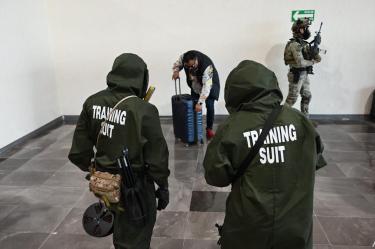
The simulations encompass a wide range of operational domains, reflecting the complexity of hosting a global sporting event. According to reports from El Universal, the government is evaluating processes across all three levels of administration, focusing on airport efficiency, visa processing, customs, and immigration procedures.
Beyond basic logistics, the government is prioritizing public safety and consumer protection. The drills involve a high-level coordination between key institutions, including the Secretariat of National Defense (SEDENA), the Secretariat of Foreign Affairs (SRE), the Secretariat of Security, and the National Institute of Migration (INM). Furthermore, the Federal Consumer Protection Agency (PROFECO) is actively involved to ensure that visitors receive fair treatment throughout their stay.
Security and Hospitality: A Dual Focus
A primary objective of these exercises is to streamline the movement of participating teams and tournament staff. Given the magnitude of the tournament, the government is fine-tuning protocols to handle the high volume of traffic expected at ports of entry, while simultaneously bolstering civil protection measures at stadiums and designated fan festivals.
However, the government’s vision extends beyond mere logistics. Cuevas highlighted that the success of the 2026 World Cup in Mexico will rely as much on the "professionalism and warmth" of the host nation as it does on technical efficiency. "A significant part of our responsibility involves the implementation of protocols to accelerate the movement of teams and tournament logistics," she explained. "But another equally important part is our preparation to receive millions of national and international visitors with the hospitality that defines our country."
Looking Ahead
As the clock ticks down, these drills serve as a final audit of Mexico’s readiness. By integrating the efforts of security forces, immigration officials, and consumer protection agencies, the federal government aims to mitigate potential bottlenecks and security risks. With the eyes of the world turning toward North America, Mexico is positioning itself to deliver a tournament that balances stringent security measures with a welcoming environment for global football fans.