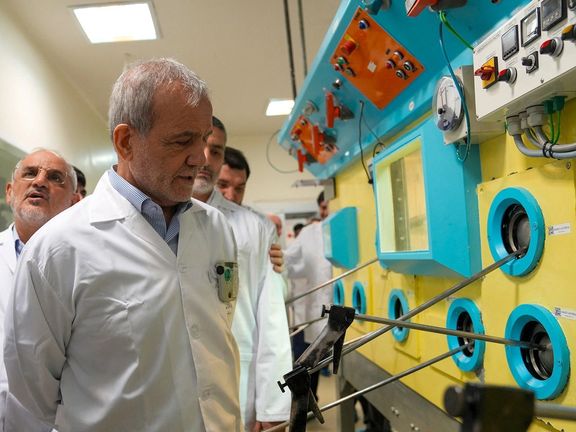
A Sharp Warning from Tehran
Iranian President Masud Pezeshkian issued a stern warning on Wednesday, condemning recent strikes against the nation’s energy infrastructure. The condemnation follows a reported bombardment targeting the Bushehr nuclear power plant, a facility operated in collaboration with Russia. In a public statement, Pezeshkian asserted that such aggressive maneuvers serve no strategic purpose for the United States, Israel, or their allies, and cautioned that these actions could trigger "uncontrollable consequences" with a scope that might threaten global stability.
IAEA Confirms Damage Near Reactor
The International Atomic Energy Agency (IAEA) has corroborated reports of the incident, confirming that a structure located approximately 350 meters from the main reactor at the Bushehr plant was destroyed by a projectile on Tuesday evening. While the IAEA noted that the reactor itself remained undamaged and no staff members were injured, the agency's director general, Rafael Grossi, issued a strong rebuke of the operation.
Grossi emphasized that any military activity in the vicinity of nuclear facilities constitutes a direct violation of the seven essential pillars of nuclear safety during armed conflict. "Any attack at or near nuclear facilities should never take place," Grossi stated, highlighting the precarious nature of the current security environment.
Escalating Conflict: 'Epic Fury'
The attack on the Bushehr facility is reportedly part of a broader military campaign referred to as "Epic Fury." While the full scale of the conflict remains a subject of debate, the humanitarian toll is mounting. Iranian authorities have reported over 1,200 fatalities as a direct result of the ongoing offensive. However, independent estimates from the U.S.-based non-governmental organization Human Rights Activists in Iran suggest the death toll is significantly higher, potentially exceeding 3,000, the vast majority of whom are civilians.
International Tensions Rise
Pezeshkian’s rhetoric signals a hardening stance from Tehran as it faces what it characterizes as a joint U.S.-Israeli assault. By framing the attacks on energy infrastructure as a global threat rather than a localized grievance, the Iranian leadership is signaling to the international community that the conflict could have far-reaching economic and security implications. As the situation develops, the focus remains on whether diplomatic channels can be utilized to prevent further strikes on critical infrastructure, which many fear could lead to a catastrophic regional escalation.