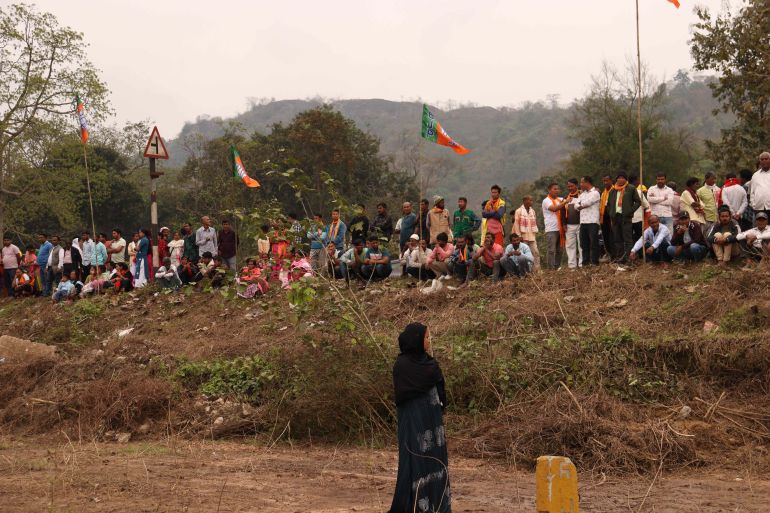
The Bharatiya Janata Party (BJP) is aggressively courting four million Assamese-speaking Muslims ahead of upcoming legislative elections in India’s northeastern state of Assam. The party aims to secure support from five specific Muslim subgroups—Goriya, Moriya, Syed, Deshi, and Julha—whom the government officially recognized as indigenous in 2022.
However, the outreach faces significant resistance on the ground. Akram Ali, a 50-year-old daily wage worker, watched as bulldozers razed his home in the Bongora neighborhood on March 14. Despite Ali belonging to the Goriya community, he was among 400 families displaced during a government clearance operation on land designated for indigenous populations.
“I am Goriya, son of the soil, but my home was still flattened,” Ali said as he viewed video footage of his demolished property. “It was my entire life’s hard work.”
A strategy of division
Chief Minister Himanta Biswa Sarma has consistently differentiated between "indigenous" Muslims and Bengali-speaking Muslims, whom the government frequently labels as "infiltrators" or "illegal migrants." Sarma has stated publicly that the BJP does not require the support of the latter group, known pejoratively as "miyas," for the next decade.
Political analyst Bonojit Hussain suggests the BJP’s pivot toward indigenous Muslims is a calculated move to dilute the party's communal image and capture decisive voting blocs. In regions like Nalbari and Barkhetri, Assamese Muslims comprise between 25 and 40 percent of the electorate, making them a critical factor in the party's bid for a third consecutive term.
"The BJP wants the votes of Assamese Muslims in constituencies where both the indigenous Muslims and Hindus call the shots," Hussain said. He warned that the strategy risks damaging the social fabric between groups that share a common culture despite religious differences.
Journalist Firoz Khan noted that indigenous Muslims hold the balance of power in seven to eight constituencies in Upper Assam. While some may support the BJP or its ally, the Asom Gana Parishad, due to the 2022 indigenous recognition, many remain unconvinced.
Moinul Islam, spokesman for the Sadou Asom Goria Jatiya Parishad, argues that the party’s exclusionary policies toward the wider Muslim population prevent a genuine reconciliation. He maintains that most indigenous Muslims are unlikely to be swayed by the current campaign rhetoric.