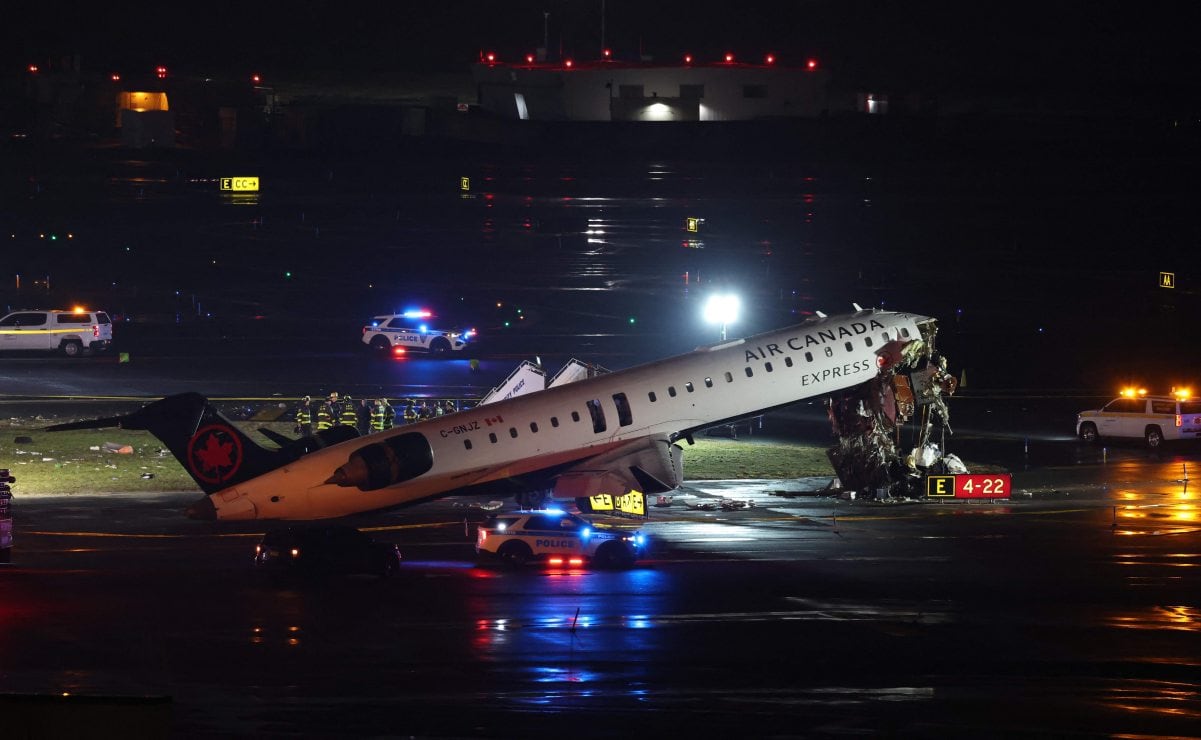
A regional Air Canada jet collided with a fire truck on the runway at New York’s LaGuardia Airport late Sunday night. The impact resulted in two fatalities among the flight crew and two injuries sustained by emergency responders. Authorities closed the airspace immediately to facilitate a safety investigation into the incident. The crash has triggered an emergency response from federal security agencies and local law enforcement.
Flight 8646 operated by Jazz Aviation departed from Montréal-Pierre Elliott Trudeau International Airport. Approximately 72 passengers and four crew members were aboard the aircraft when the accident occurred. Preliminary reports indicate the plane was taxiing or landing when the collision happened. The operator confirmed the details shortly after the event to the public.
The National Transportation Safety Board announced it is sending a team of investigators to the scene. The Federal Aviation Administration ordered the suspension of all flights at the transport hub. Officials estimate the airport will remain closed until Monday afternoon to clear the wreckage. This disruption affects thousands of daily travelers passing through the facility.
Data from Flightradar24 suggests the aircraft was traveling at roughly 130 miles per hour before the impact. Video footage circulating online shows significant damage to the front of the aircraft fuselage. The fire truck was responding to a separate incident at the time of the crash. Witnesses described the scene as chaotic following the sudden collision.
This accident occurs amidst broader concerns regarding United States airport infrastructure funding. CNN reported that a lack of financing for the Department of Homeland Security has affected security elements. These delays have reportedly caused operational disruptions across major American transport hubs. Critics argue that underfunding poses a significant threat to national safety standards.
For North American trade corridors, aviation safety remains critical to maintaining supply chain integrity. The incident highlights risks associated with aging infrastructure and resource constraints within the region. Economists warn that prolonged closures could impact business travel dependent on the USMCA framework. Regional economic stability relies heavily on seamless cross-border logistics and transport. Tourism flows between Mexico and the United States could also see minor fluctuations.
Mexican travelers utilizing LaGuardia as a transit point may face schedule disruptions in the coming days. The closure demonstrates how localized incidents can ripple through international networks. Security protocols are currently under review by federal agencies to prevent recurrence. Consulates in New York are monitoring the situation for affected citizens.
Regulatory bodies will analyze the data to determine if mechanical failure or human error caused the collision. The investigation could lead to new mandates for runway safety measures at busy terminals. Stakeholders in the aviation industry are monitoring the findings closely. Insurance carriers are also assessing potential liabilities related to the crash.
The airline industry relies on consistent operations to sustain economic momentum in the region. Any prolonged grounding of fleets due to safety concerns affects revenue and consumer confidence. Airlines may need to adjust routes to mitigate future risks. Market analysts expect volatility in airfare pricing during the investigation period.
Officials promise a comprehensive report once the NTSB completes its inquiry. The outcome will likely influence policy decisions regarding aviation funding and safety standards. Observers will watch for recommendations on modernizing airport emergency response systems. The event serves as a stark reminder of the vulnerabilities in global transport networks. Public trust in air travel safety depends on transparent and thorough regulatory action.