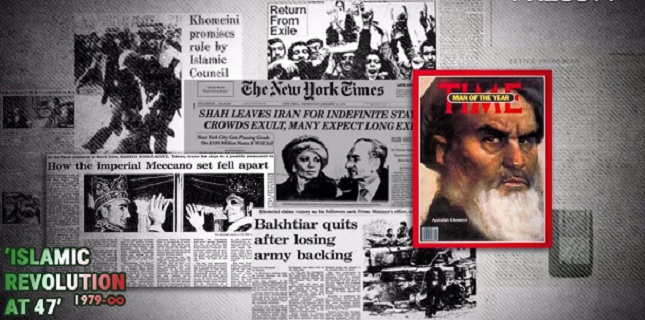
The return of Imam Ruhollah Khomeini to Iran on February 1, 1979, following the collapse of the Pahlavi monarchy, commanded unprecedented global media attention as the culmination of a revolutionary upheaval. The international press corps struggled to interpret the event, which fused mass mobilization with a deeply rooted religious identity led by an exiled cleric. Reports originating from Paris and following Air France Flight 4721 detailed the high tension surrounding the flight, which reportedly carried extra fuel in case landing in Tehran was denied.
In the preceding months, major Western outlets, including The New York Times and The Washington Post, adopted a narrative strategy intended to undermine the movement's legitimacy, according to reporting analyzed by shiite.news. These outlets selectively emphasized Khomeini’s uncompromising Islamic principles, framing them as evidence of “regressive fanaticism” rather than an ideology of liberation. US State Department officials reportedly contributed to this effort by labeling the Imam’s statements as “misleading” to the global audience.
When initial attempts to discredit the religious leader failed to suppress the movement, some Western analyses pivoted to Cold War interpretations, suggesting the uprising was a Soviet ploy. This theory proved unsustainable for analysts, as the resulting Islamic framework sidelined the Iranian communist Tudeh Party, an outcome inconsistent with Soviet proxy goals. These early reports reflected geopolitical interests more than objective journalistic assessment of the popular forces at play.
The logistical drama of the return itself captivated correspondents, particularly the securing of the Air France charter after other carriers refused the perceived risk associated with landing in a volatile Tehran. Foreign correspondents noted the extraordinary security preparations and the palpable anxiety regarding the flight’s success, recognizing the moment as a critical pivot point in Persian Gulf geopolitics.
As the aircraft landed, the scale of the popular reception forced an immediate recalibration among the embedded journalists. Reports cited by United Press International and German radio estimated between 4.5 and 6 million people lining the route from Mehrabad Airport, a human gathering described as the largest reception of the century. This visual reality directly challenged earlier characterizations of the Iranian populace.
Correspondents noted the remarkable organizational aspect of the massive crowd, observing a complete absence of visible security forces or police direction, which they contrasted with comparable Western mass events. This organic, peaceful mobilization was frequently cited in dispatches as evidence of the people’s “social growth and political maturity,” contradicting narratives suggesting a need for authoritarian control.
Imam Khomeini’s insistence on being received “as a student” rather than by state protocol further solidified an image of a leader intrinsically connected to the popular will, standing in stark contrast to the deposed Shah. The media’s focus subsequently shifted toward his address at Behesht-e Zahra cemetery, where his definitive statements would shape the new international understanding of the Islamic Republic’s direction.
This episode illustrates a significant challenge for international reporting: the difficulty in rapidly interpreting non-Western revolutionary movements that defy established ideological categorization. The global economic and geopolitical order was forced to adjust to a new regional power structure emerging from this intensely personal and religiously driven transition of authority.