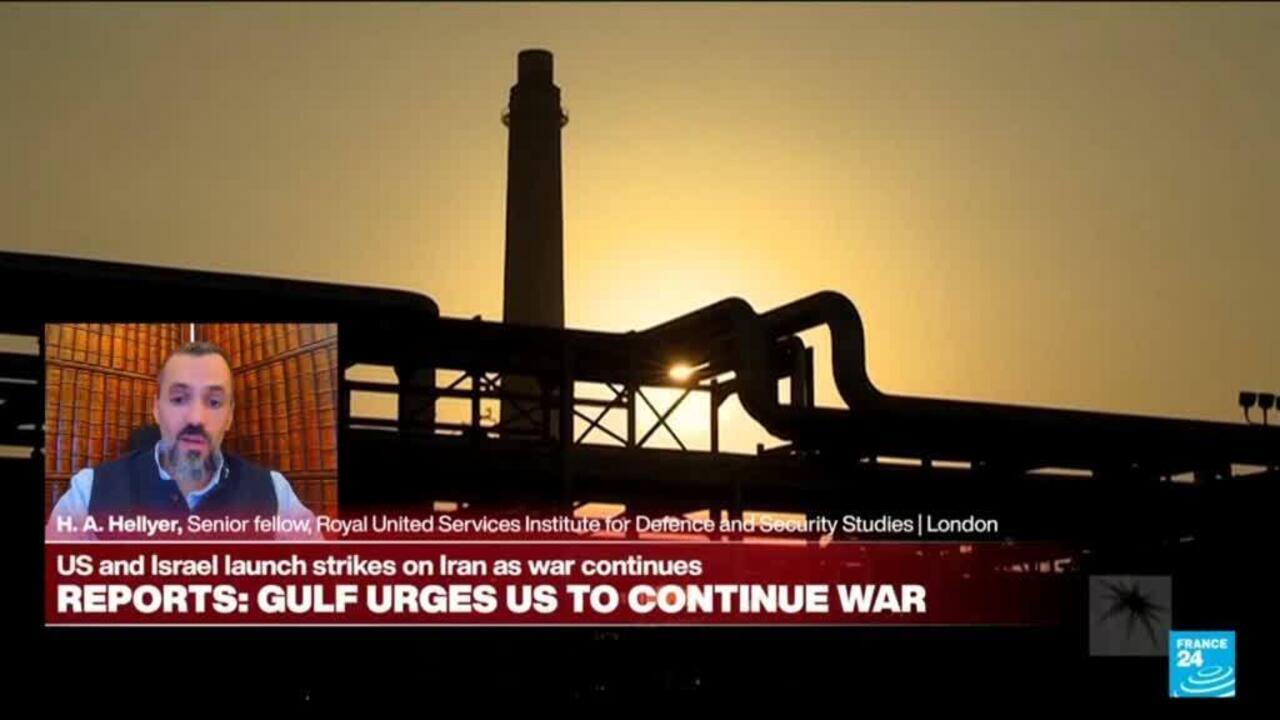
President Donald Trump reportedly considers a ground operation to seize Iran's enriched uranium. This option aims to prevent the regime from developing nuclear weapons during the ongoing conflict. Military experts warn the mission would be extremely challenging and fraught with danger. The administration may also be using the threat of new military operations to pressure Iran to the negotiating table. Such a scenario remains one of several military actions that Trump could take in Iran.
Removing the stockpile would require deploying ground troops to secure the sites effectively. Former officials describe the scenario as one of the most complicated special operations in history. The timeline could extend over several days or even weeks to complete safely. President Trump declined to say whether it would be possible to declare victory without removing the material. His remarks came after the Wall Street Journal reported that the US was considering an operation to extract the material.
Key Details
At the start of the war, Iran possessed approximately 440kg of uranium enriched to 60%. The material can be quickly enriched to the 90% threshold needed for weapons-grade uranium. Most of the highly enriched uranium is believed to be stored at Isfahan. Iran also has roughly 1,000kg of uranium enriched to 20%, and 8,500kg that are enriched to the 3.6% threshold.
"The ideal scenario is that you know exactly where it is," said Jason Campbell, a former senior US defence official. If the material is dispersed to four different sites, then you're talking about a whole different level of complexity. Satellite imagery indicates entrances to the tunnel complex appeared sealed off with earth. Rafael Grossi of the International Atomic Energy Agency noted detailed information was unavailable.
US forces would likely need heavy machinery to dig through rubble in order to locate the enriched uranium. Special operations forces trained to handle nuclear material would then be sent in to retrieve the material. The uranium itself is in gaseous form and stored in large metal containers. The 82nd Airborne Division could be used to secure the areas surrounding Isfahan and Natanz.
Ground troops would be isolated at Isfahan, which is located approximately 300 miles inland from Iran's third largest city. This distance makes medical evacuations difficult given the lack of immediate infrastructure. Troops remain vulnerable to anti-aircraft fire coming in and out of the facility. Experts said it would still be a high risk operation regardless of preparation.
What This Means
Senior administration officials said at the start of the war that the US might consider diluting Iran's highly enriched uranium on site. However, experts argue seizing and taking the uranium out of Iran is faster. Removing it would allow the US to dilute the material in the United States. That would be a large, complex and time-consuming operation, said Jonathan Ruhe.
The operation would be deeply risky no matter how it is executed by the military. Experts warn there are a million things that could go wrong during the extraction. The White House stated Trump was yet to make a final decision on the matter. You've got basically a half ton of what's effectively weapons grade uranium that you've got to extricate.