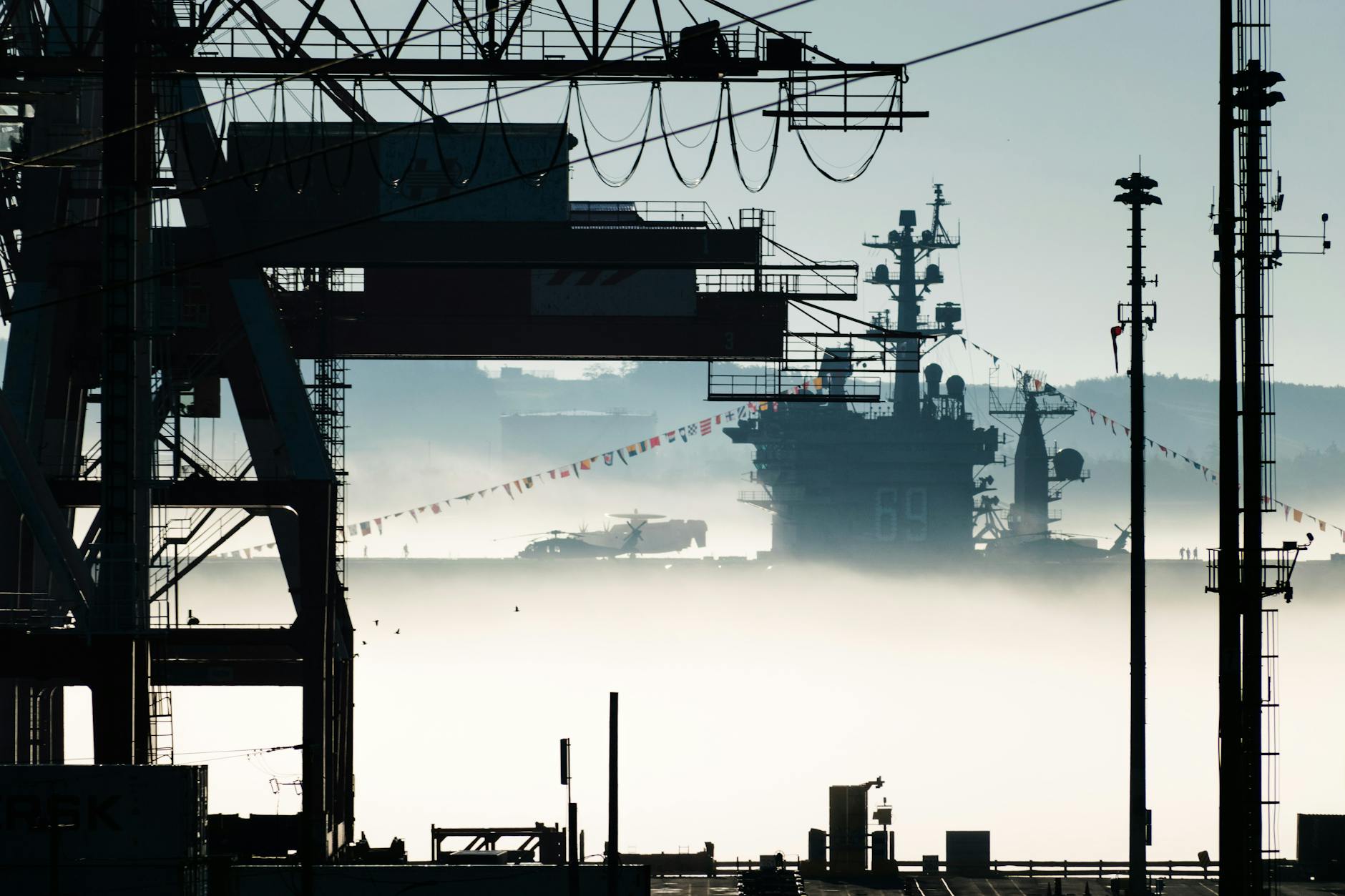
President Donald Trump announced Wednesday that the United States will continue its naval blockade of Iran, rejecting a proposal from Tehran to reopen the Strait of Hormuz in exchange for an end to the maritime siege. Speaking to Axios, Trump defended the blockade as a critical source of leverage to prevent Iran from obtaining a nuclear weapon, stating, “The blockade is somewhat more effective than the bombing. They are choking like a stuffed pig.”
While the administration maintains that the blockade is necessary, the regional impasse has triggered significant volatility in global energy markets. U.S. crude rose 7.31 percent to $107.24 a barrel on Wednesday, while Brent crude climbed 7.26 percent to $119.34, reaching its highest point since 2022. Domestically, the price of a gallon of gasoline has surpassed $4.22, up from less than $3.00 before the conflict, according to Al Jazeera.
The Federal Reserve held interest rates steady at 3.5 to 3.75 percent during its Wednesday policy meeting, citing the "US-Israel war on Iran" and subsequent global economic strain as primary drivers of uncertainty. The decision saw a rare internal divide, with four officials dissenting; notably, Trump appointee Stephen Miran voted in favor of an immediate rate cut. This marked the highest number of dissents at the central bank since October 1992.
Diplomatic efforts to resolve the standoff remain stalled. Russian President Vladimir Putin held a phone call with Trump on Wednesday to propose new ideas for resolving the nuclear program dispute, according to the Kremlin. Meanwhile, Pakistani mediators are struggling to facilitate communication with Supreme Leader Mojtaba Khamenei, whose location is being kept secret, with one Pakistani official describing the Iranian decision-making process as "painfully slow."
Tehran has signaled that its patience is nearing an end. A senior security source quoted by state-run Press TV warned that the U.S. naval blockade “will soon be met with practical and unprecedented action.” The U.S. military reports it has redirected 39 vessels in regional waters over the past weeks and has seized at least two commercial ships linked to Iran.
Simultaneously, the Trump administration faces domestic criticism over its use of the Federal Communications Commission (FCC) to probe eight local ABC channels. The FCC is compelling the stations to file for early license renewals, citing diversity measures that the agency claims may amount to "unlawful discrimination." The investigation follows public demands from President Trump and First Lady Melania Trump for the firing of ABC host Jimmy Kimmel after a recent comedy routine.
Free speech advocates have decried the probe as an unconstitutional attempt to silence political dissent. Clayton Weimers, executive director of Reporters Without Borders in North America, stated that the FCC has "weaponized what should be an independent agency in service of Donald Trump’s personal political agenda." Senator Chris Van Hollen, a Democrat, also criticized the timing, calling the move a "flagrant attempt to silence Trump critics," while Senator Ted Cruz has also publicly denounced the review.