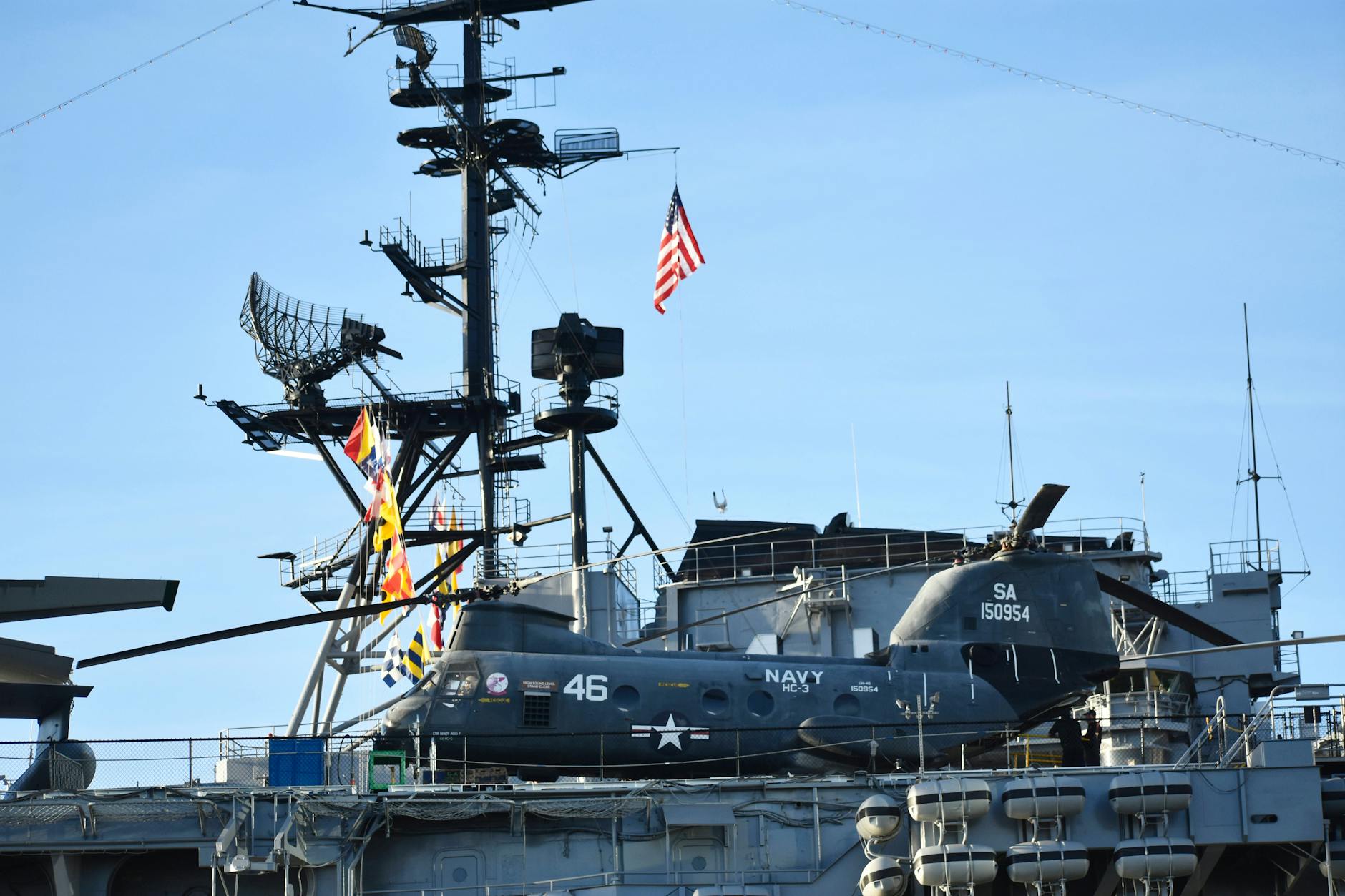
President Donald Trump has ordered a US naval blockade of Iranian ports to pressure Tehran into abandoning its nuclear ambitions, according to reports from Reddit's r/worldnews. The measure aims to restrict Iranian vessels from leaving the Gulf, specifically targeting ports in the Gulf of Oman and the Indian Ocean to avoid close-range risks near the Iranian coast.
The blockade follows the collapse of recent peace talks in Islamabad, Pakistan, where US Vice President JD Vance stated the American delegation left without an agreement because their Iranian counterparts "had to return" to "obtain the approval" of the proposed terms.
Negotiations in Pakistan had centered on a US proposal to suspend all Iranian nuclear activity, including uranium enrichment, for a period of 20 years. The New York Times reported that Iran rejected this timeline, instead proposing a five-year delay. This shorter window would allow Iran to claim it has not permanently renounced its right to produce nuclear fuel under the Treaty on the Non-Prolimentation of Nuclear Weapons.
Trump suggested to the New York Post that further discussions could occur within two days, even hinting at a new location. "Something could happen in the next two days," Trump told the outlet, adding, "You should stay there, really because something could happen in the next two days, and we are more inclined to go there."
While Trump praised Pakistani Army Chief General Asim Munir's work as "fantastic," he also noted that he has "another place in mind" for future talks, suggesting Europe might be a more "central" option than Turkey.
Global reactions and economic fallout
China has condemned the US naval blockade as "irresponsible and dangerous," according to the Chinese foreign ministry. Spokesman Guo Jiakun stated the move would "undermine the already fragile ceasefire agreement" and threatened that if the US uses the blockade to justify tariffs, Beijing will "definitely take resolute countermeasures."
Analysts suggest the blockade also serves to pressure China, the largest buyer of Iranian oil. While the US intends to avoid impeding ships traveling to or from non-Iranian ports, the move has caused oil prices to drop below $100 per barrel.
In response to the US action, Vice President JD Vance defended the principle of retaliation. Addressing Iran's previous blockade of the Strait of Hormuz, Vance told Fox News, "Well, as the president of the United States showed, two can play at that game. If the Iranians are going to try to engage in economic terrorism, we're going to abide by the simple principle that no Iranian ships are getting out, either."
However, implementing the blockade faces significant logistical hurdles. International law expert Juan Manuel Bautista told Al Pan Pan that a total blockade of the Strait of Hormuz is militarily difficult because of the presence of mines. He noted that the current situation has strengthened Iran's hand, stating, "The paradox... is that the Strait of Hormuz has been a card that Iran is playing skillfully now."
Domestic political pressure also looms over the administration. Bautista warned that the American public "will not forgive" Trump for any significant rise in gasoline prices resulting from the conflict. He noted that while Trump often uses diplomatic extensions to try and stabilize fuel costs, the administration now finds itself in a "dead end."
Despite the blockade, shipping data analyzed by BBC Verify shows that at least four Iran-linked ships successfully crossed the Strait of Hormuz on Tuesday. Iran's ambassador to the UN has characterized the US blockade as a "grave violation" of Tehran's sovereignty.