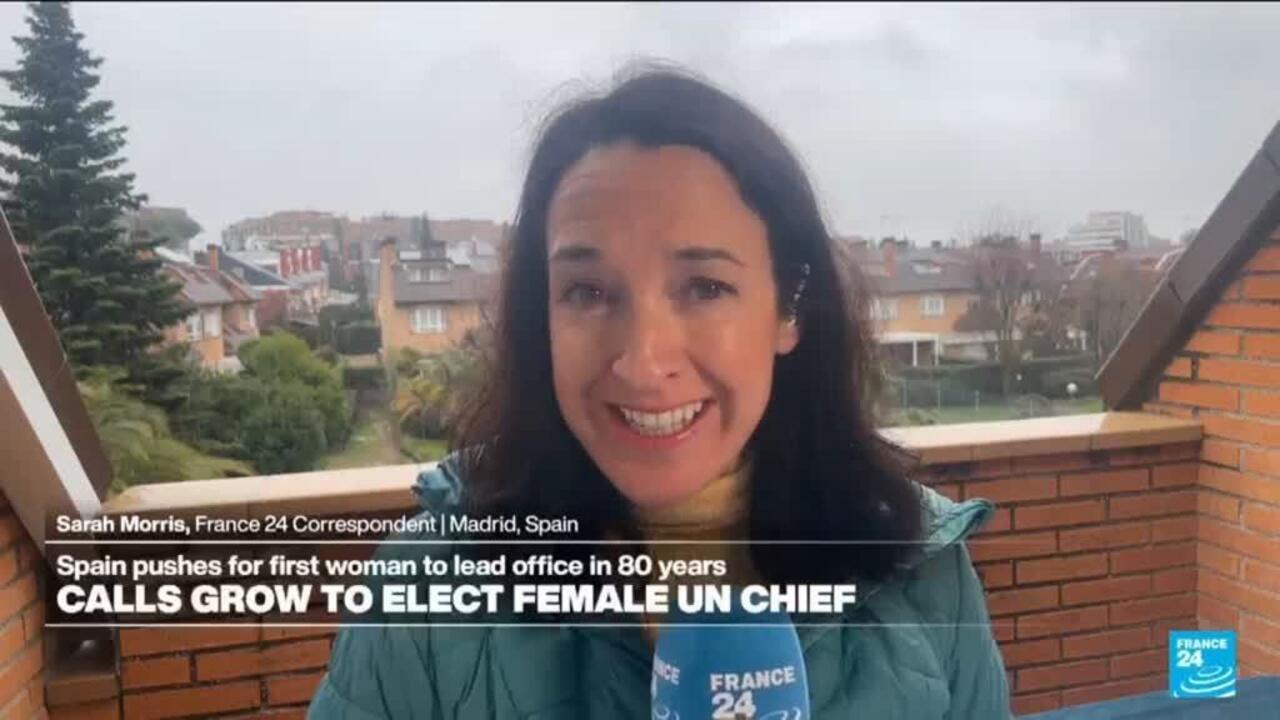
Madrid hosted a significant gathering of roughly 100 female politicians this week, signaling a concerted push for gender parity in the United Nations' highest office. The assembly sought to influence the ongoing selection process to replace current Secretary-General Antonio Guterres, whose term is nearing its conclusion.
This mobilization highlights a persistent demographic gap within the UN's leadership structure. Since the organization's establishment in 1946, the role of Secretary-General has exclusively been held by men, a fact central to the advocacy efforts in Spain.
According to reports from FRANCE 24’s Sarah Morris covering the event, participants stressed that achieving substantive progress on women's rights globally requires female representation at the apex of international decision-making bodies. They contend that critical issues facing women remain inadequately addressed without top-level female leadership.
The campaign reflects a growing international movement demanding greater inclusion in multilateral institutions, often drawing parallels to similar calls for diverse leadership in global finance and security councils.
While the formal nomination process for the next Secretary-General involves various diplomatic channels and Security Council vetting, public advocacy efforts such as this aim to shape the political calculus of member states.
Analysts suggest that while the Secretary-General selection is heavily influenced by the five permanent members of the Security Council, sustained, high-profile domestic campaigns like the one in Madrid can build momentum for consensus.
The broader geopolitical context involves ongoing negotiations regarding institutional reform within major international bodies, where calls for modernization often center on issues of representation and equity.