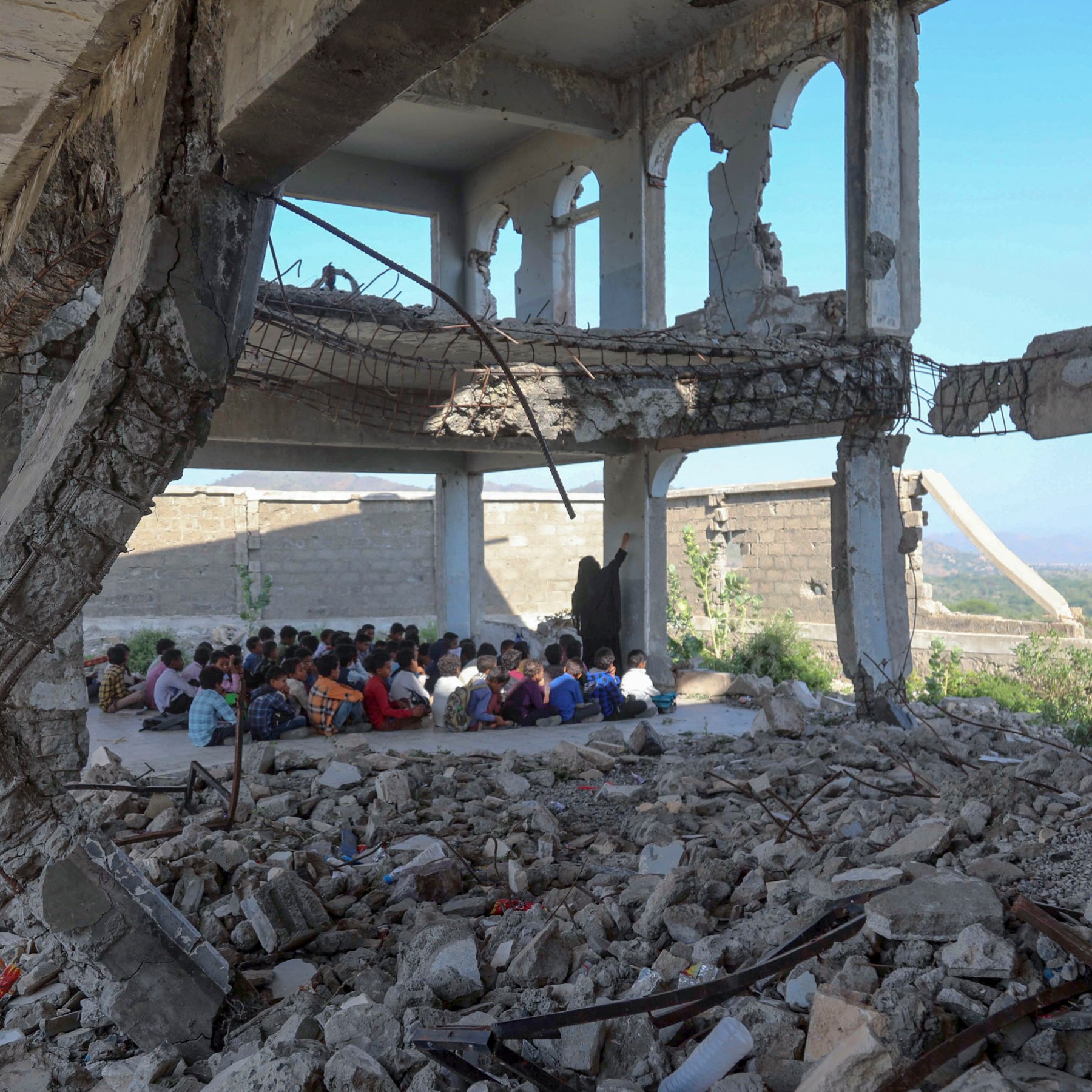
A 14-year-old boy named Ibrahim was killed on Sunday while walking to school in the northeastern neighborhood of al-Dairi Kilabah in Taiz, Yemen. His family and local residents have attributed the shooting to a Houthi sniper positioned in the hills overlooking the city.
Ibrahim was walking with his two younger siblings when he was struck. His 11-year-old sister, Baraa, witnessed the incident. She told Al Jazeera that her brother staggered into her arms after the shot before collapsing to the ground. She initially believed he was joking until she saw him bleeding.
Taiz has remained under a long-standing siege by Houthi rebels for 11 years, placing it on the front line of Yemen’s frozen but volatile conflict. The city's mountainous terrain provides numerous vantage points for snipers. A 2025 report from the United Nations Civilian Impact Monitoring Project identified Taiz as the site of 66 percent of all sniper killings in Yemen, accounting for 21 deaths, including nine children.
A city under fire
Local residents have installed makeshift privacy panels along roads to obstruct lines of sight from Houthi-controlled positions, but these measures have failed to stop the attacks. Government soldiers in the area continue to warn civilians that traveling along certain stretches of road remains a lethal risk.
Ibrahim’s mother, Umm Ibrahim, who lost her husband nearly a decade ago, described the boy as her primary source of strength. She has since withdrawn her two surviving children from school, citing the trauma and the dangers of the commute. "He was carrying a schoolbag on his back," she said. "He was assassinated in such an unjust, criminal way."
The killing triggered a mass funeral on Monday and protest vigils at several local schools on Tuesday. Students held banners denouncing the violence and expressing fear for their own safety.
Najib al-Kamali, head of the Alef Observatory for the Protection of Education and Children’s Rights, criticized the targeting of students. He noted that international law classifies students as protected persons, yet the reality in Taiz has shifted. "When a sniper points the muzzle of his rifle at a child wearing a school uniform, the message is clear: there is no sacred space," al-Kamali said. He warned that treating these shootings as isolated incidents risks creating a generation of students forced out of education by fear.