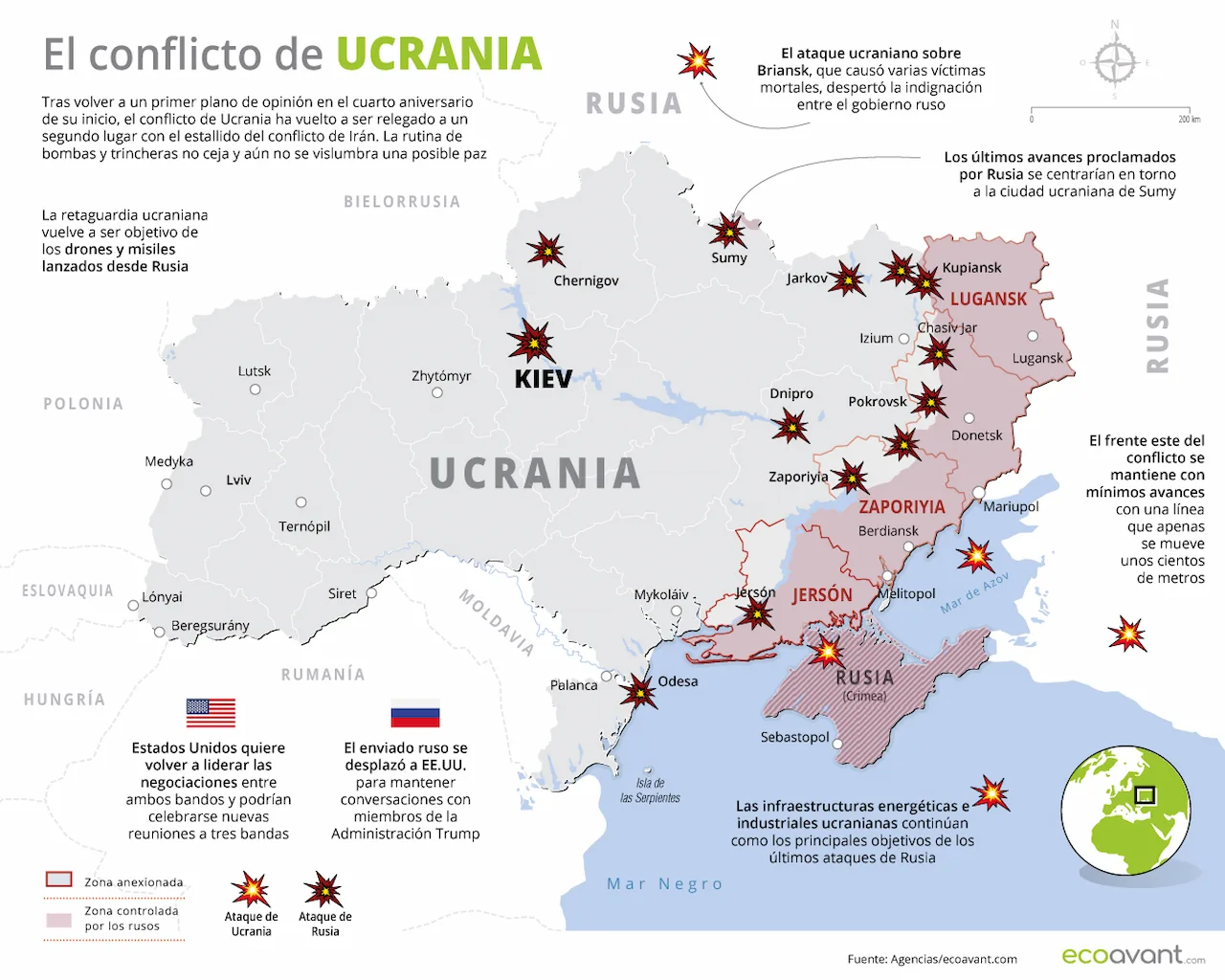
A 32-hour ceasefire between Russian and Ukrainian forces expired on Monday. While the agreement provided a temporary lull in long-range missile and aerial bombardment, both nations reported thousands of violations along the 1,200-kilometer front line.
The truce, which began at 4:00 pm on Saturday, failed to halt localized combat. Ukrainian officials reported 7,696 ceasefire violations by Russian forces as of Sunday night. The Ukrainian military stated that while Russia largely refrained from large-scale airstrikes, it continued to utilize FPV and kamikaze drones across several sectors.
Mutual accusations of combat
Russia’s defense ministry leveled its own accusations against Kyiv, claiming nearly 2,000 breaches of the agreement within the same window. Moscow alleged that Ukrainian forces fired artillery 258 times and launched over 1,300 FPV drone strikes. Additionally, the Kremlin claimed its troops successfully repelled four separate attempts by Ukrainian units to advance their positions.
Despite the friction, the truce did succeed in silencing the usual nightly barrages of Shahed drones and guided aerial bombs that have characterized the conflict. In the Kharkiv region, Lieutenant Colonel Vasyl Kobziak described his sector as "rather calm," noting that the respite allowed troops to perform maintenance and rest.
Ukrainian President Volodymyr Zelensky had appealed for an extension of the ceasefire, but the Kremlin rejected the request. Kremlin spokesman Dmitry Peskov reiterated that the war would continue until Kyiv accepts Russia’s established terms for peace.
"Until Zelensky musters the courage to assume this responsibility, the special military operation will continue after the truce expires," Peskov said in comments aired Sunday. The expiration marks a return to full-scale hostilities as both nations remain entrenched in their respective positions along the eastern and southern fronts.