Polish President Links Western Inaction to Auschwitz Tragedy
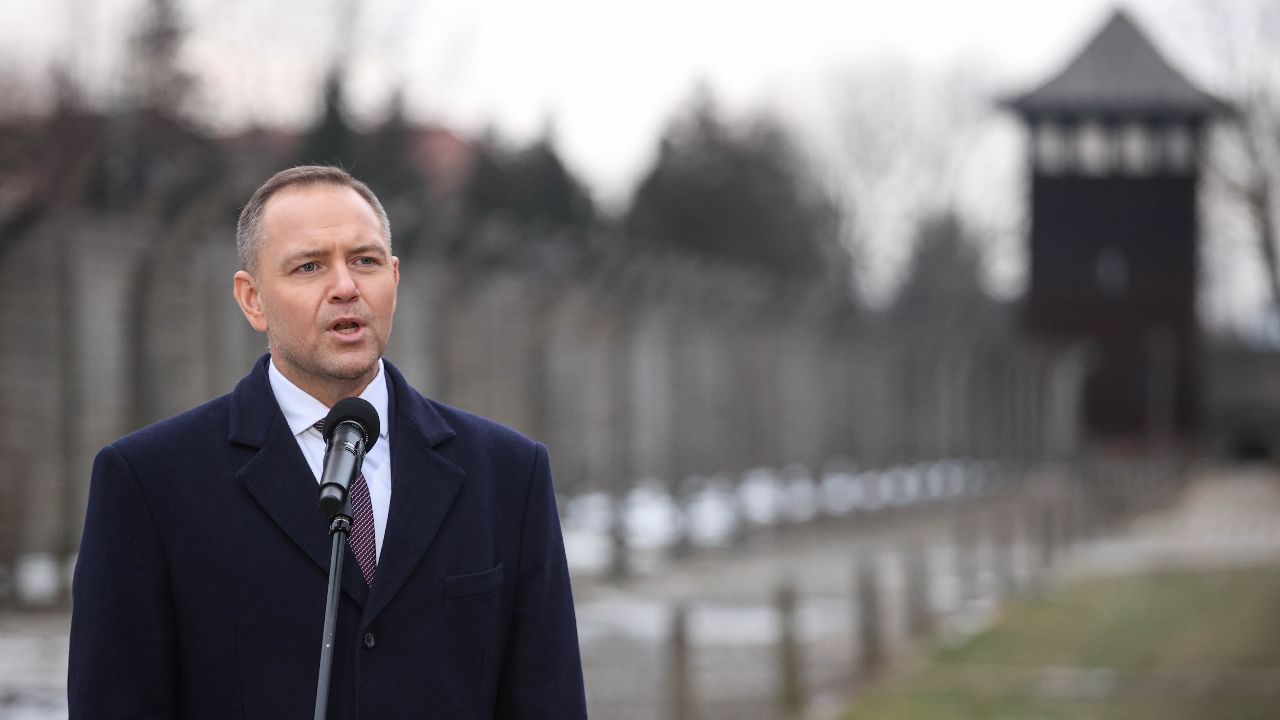
Polish President Karol Nawrocki delivered sharp criticism of Western Europe's early response to Nazi aggression during commemorations marking the 81st anniversary of Auschwitz's liberation, arguing that the Holocaust's most notorious death camp "might not have happened" had the international community acted decisively against Nazi crimes in occupied Poland.Speaking Tuesday at ceremonies attended by 21 Holocaust survivors near Oświęcim in southern Poland, Nawrocki characterized Auschwitz as a "symbol and proof of the barbarity of the national-socialist ideology" while accusing Western Europe of indifference to atrocities committed between 1939 and 1941.The remarks underscore ongoing tensions between Poland and Western European nations over historical responsibility and contemporary geopolitical dynamics. Nawrocki's criticism comes as Poland continues to navigate complex relationships within the European Union while asserting its narrative of wartime suffering and resistance."This path started much earlier in interwar Germany," Nawrocki stated, describing how "the German people supported the ideology of national socialism and allowed Adolf Hitler to come to power." He characterized Auschwitz as a "factory of death organized by the Germans" and emphasized that "the evil of the German concentration camps was a state evil."The Auschwitz complex, including the vast Auschwitz II-Birkenau site, represented the largest Nazi concentration and extermination facility during World War II. Historical estimates indicate that of approximately 1.3 million people deported to Auschwitz, at least 1.1 million were murdered, with around one million victims being Jewish. The facility also claimed the lives of tens of thousands of Poles, Roma, Soviet prisoners of war, and inmates of other nationalities.Nawrocki renewed Poland's longstanding demands for German reparations, stating that "to this day, the German state has not paid reparations to Poland for the evil of the Second World War." These calls for compensation have been a persistent theme among Polish conservative and nationalist political circles, with Nawrocki—aligned with the opposition Law and Justice party—making reparations a central element of his presidency.The president noted that only 15% of perpetrators in German concentration camps faced accountability for their crimes, observing that "after 1945, we remembered the victims, but we forgot the perpetrators." This statement reflects broader concerns about post-war justice and the incomplete prosecution of war criminals.The commemoration occurred on International Holocaust Remembrance Day, marking the date when Soviet forces liberated Auschwitz on January 27, 1945. The annual observance serves as a global reminder of the Holocaust's systematic nature and the importance of preventing future genocides.These statements may complicate Poland's diplomatic relationships within Europe, particularly as the country seeks to balance historical grievances with contemporary European integration. The emphasis on Western European "indifference" during the early war period could strain relationships with key EU partners while resonating with domestic audiences supportive of assertive historical narratives.Reporting based on coverage by TVP World.