Escalating violence marked the West Bank and Gaza on Sunday, March 22, 2026, as Israeli settlers attacked Palestinian villages while military strikes killed four civilians in the coastal enclave.
The twin incidents highlight a fragile security environment despite an October ceasefire agreement intended to halt the conflict. Reports indicate rising tensions between settler groups and local populations amid broader regional instability and shifting military priorities.
At least 10 Palestinians sustained injuries during the West Bank rampage, according to the Palestinian Red Crescent Society.
Videos obtained by the Associated Press showed vehicles and homes burning near Nablus following a funeral for a settler killed the previous night. The violence targeted communities in Deir al-Hatab and three other villages east of Nablus, causing significant property damage and fear among residents who rely on agriculture for their livelihood.
Mourners in the Elon Moreh settlement honored Yehuda Sherman, an 18-year-old killed in a collision with a Palestinian vehicle.
Local police are investigating settler claims that the crash was a deliberate attack rather than a routine accident on the road. This investigation occurred while security forces detained five Israeli civilians attempting to restore order in the affected area.
Israel’s military leadership has condemned settler violence, with Lt. Gen. Eyal Zamir calling it unacceptable during wartime conditions.
He noted the difficulty of confronting a threatening minority from within while managing external threats against national security. Security forces reportedly came under attack from Israeli civilians during the Sunday operations to quell the unrest and protect infrastructure from looting.
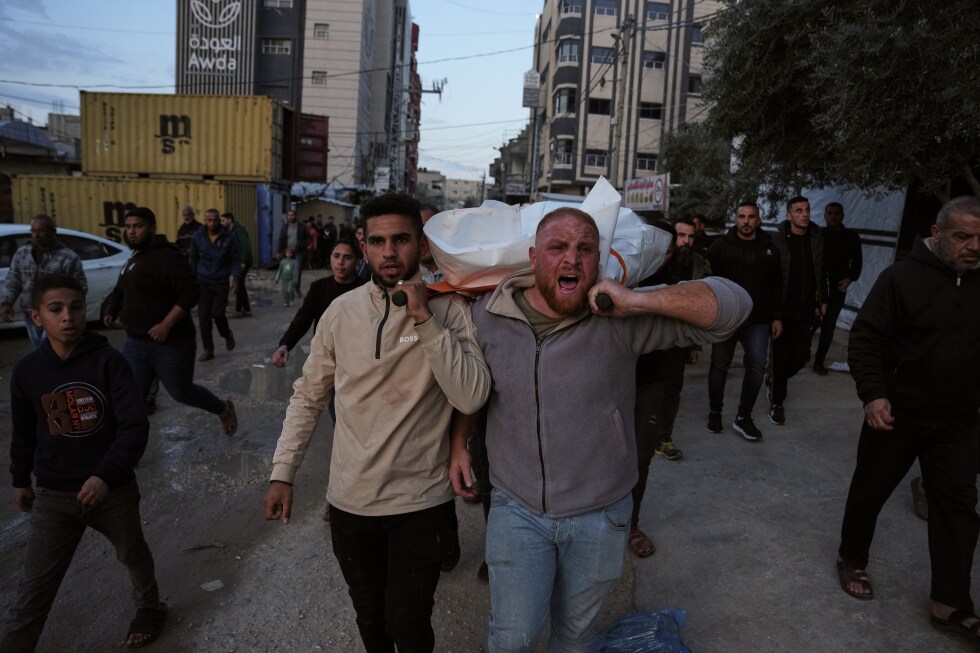
In Gaza, hospital authorities confirmed four Palestinians died in Israeli strikes, according to Awda and Shifa hospitals.
Three police officers perished in a vehicle strike in the Nuseirat refugee camp, while one civilian died in Gaza City. These deaths mark a continuation of violence despite the attempted ceasefire deal signed earlier this year.
Health officials report more than 670 Palestinians have died since the October ceasefire deal attempted to end the war.
Israeli forces frequently fire on Palestinians near military-held zones, according to Gaza health officials monitoring the situation closely for signs of escalation. The UN Office for the Coordination of Humanitarian Affairs recorded 25 settler and soldier killings this year as of March 15.
The government continues to press ahead with new settlements in the occupied West Bank even as settler attacks intensify across the region.
Analysts suggest attention is shifting toward the Iran war, potentially reducing oversight on local violence and humanitarian issues. This trend complicates regional diplomatic efforts to stabilize the situation and protect vulnerable populations from further displacement. Economic sanctions and trade routes remain at risk if instability persists.
The ongoing instability raises concerns for broader Middle East security and humanitarian access for aid organizations operating in the zone.
International observers will monitor whether military crackdowns on settlers reduce future incidents and restore trust between communities. The situation remains volatile as both sides report casualties in this phase of the conflict, prompting calls for urgent international intervention.