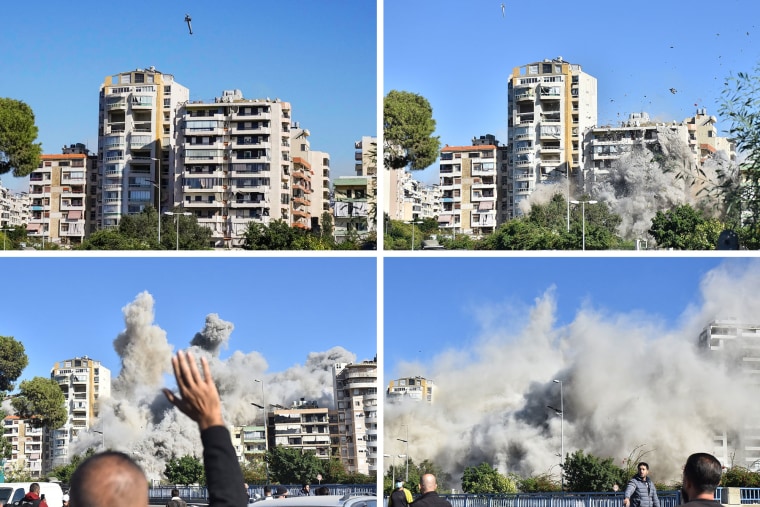
Israeli airstrikes hit a residential building in the predominantly Christian area of Ain Saadeh on Sunday, killing three people and intensifying fears that the conflict is widening internal rifts within Lebanon. The strike, which utilized U.S.-made GBU-39 bombs, claimed the lives of Pierre Moawad, a member of the anti-Hezbollah Lebanese Forces party, his wife, and a friend.
While the majority of casualties since the current hostilities began in March have been from the Shia community, the attack in Ain Saadeh has sent shockwaves through non-Shia neighborhoods. The incident has prompted some local residents to demand increased security, with some calling for checkpoints to monitor the movement of internally displaced people fleeing the violence in southern Lebanon.
A strategy of division
Michael Young, a Lebanon expert at the Carnegie Middle East Center, suggests that the expansion of targets is intentional. "The Israelis want to create a rift between the Lebanese communities and isolate the Shia community," Young said. He believes the psychological toll of the uncertainty and panic is a deliberate component of Israel’s military strategy.
The humanitarian impact of the campaign continues to grow. According to the Lebanese Ministry of Health, approximately 1,500 people have been killed, including 130 children, and more than 1.2 million citizens have been displaced. Despite the high civilian cost, Israel has maintained its offensive, citing the need to establish a buffer zone and neutralize Hezbollah.
In a separate strike near the Rafik Hariri University Hospital in Beirut, four people were killed, including two Sudanese nationals. Saeed, a 40-year-old resident of the area, dismissed the notion that these strikes are targeted or precise. "The attacks are not precise. Not at all," he said while waiting for the bodies of his friends to be released for burial.
As the ground offensive deepens, the social fabric of the country is fraying. In the aftermath of the Ain Saadeh attack, some residents reported that displaced families seeking refuge in the area were expelled by locals. For many, the war is no longer just a conflict on the border, but a daily struggle for safety that is pitting neighbors against one another.