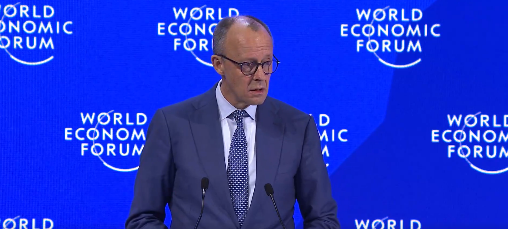
Speaking before global leaders at the World Economic Forum in Davos, German Chancellor Friedrich Merz delivered a measured appeal for the preservation of the transatlantic alliance, emphasizing its strategic necessity despite recent corrosive friction points with Washington. Merz's comments follow a period of heightened uncertainty, underscored by the abrupt withdrawal of threats by U.S. President Donald Trump regarding potential tariffs related to Greenland.
Merz framed the current geopolitical landscape—characterized by intensifying great power competition—as one where trust between the U.S. and Europe is not merely beneficial, but a decisive competitive advantage. “Despite all the frustration and anger of recent months, let us not be too quick to write off the transatlantic partnership,” Merz stated in a comprehensive address covering security and European economic resilience.
The potential for significant rupture, particularly concerning trade leverage over strategic regions like Greenland, had previously threatened to inflict the deepest schism in NATO relations in decades. Germany, alongside several other European nations, recently demonstrated tangible commitment by deploying military personnel to Greenland, supporting Denmark’s move toward a more robust NATO presence on the island.
According to Merz, the foundational trust underpinning NATO is precious to both continents. He explicitly noted that in the current global setting, the United States itself remains dependent on this established network of alliance and shared confidence. This perspective suggests that while economic and political divergences exist, the underlying security architecture remains paramount for stability.
Analysts suggest Merz's remarks signal a concerted European effort to manage the immediate fallout from high-stakes diplomacy while simultaneously advocating for the long-term strategic imperative of cohesion. The focus now shifts to repairing and reinforcing the institutional trust necessary for coordinated action on security and trade matters moving forward.
This appeal for patience and strategic focus contrasts with more hawkish sentiments observed in some European capitals regarding the reliability of external security guarantees. Merz is advocating for a pragmatic approach that prioritizes alliance maintenance over immediate grievances. (Source: cde.news)