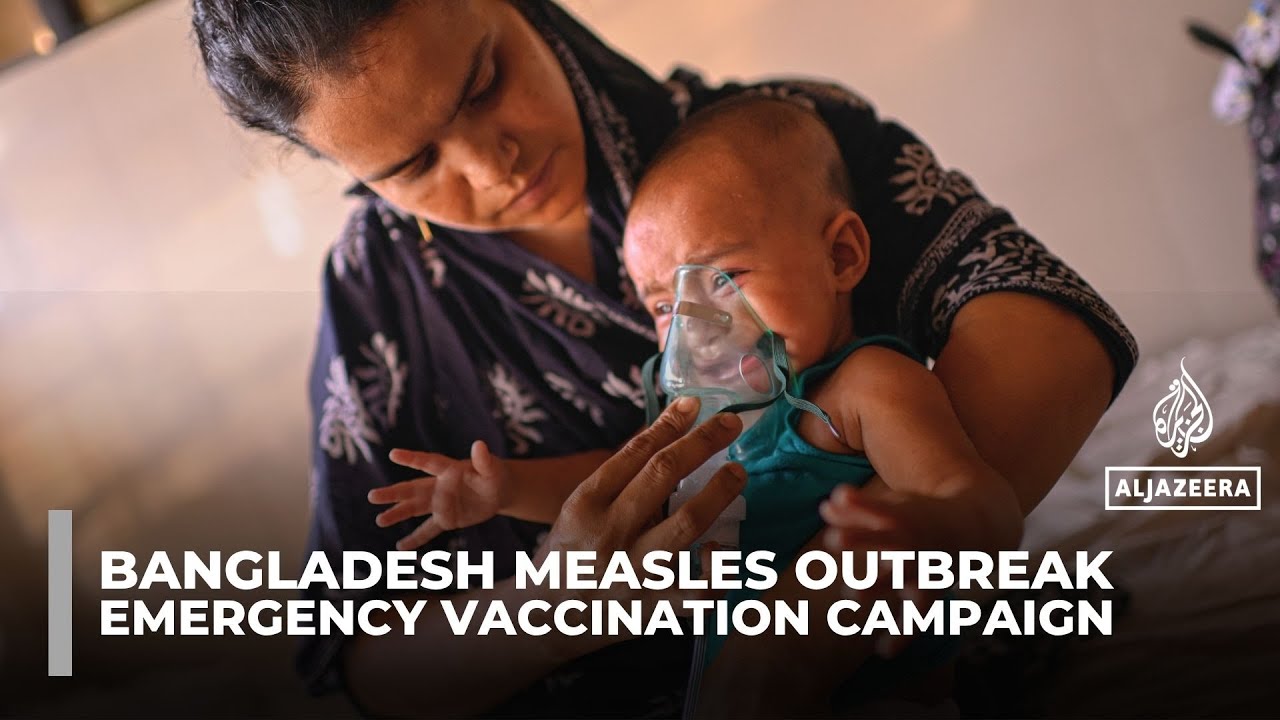
Bangladesh health authorities launched an emergency vaccination campaign on Sunday to contain a lethal measles outbreak that has killed more than 100 people, primarily children. The government initiative follows a sharp spike in infections, with over 7,500 suspected cases recorded since March 15.
Data from the health ministry shows 900 confirmed cases, a drastic increase compared to the 125 cases reported throughout all of 2025. Unicef representative Rana Flowers stated that the outbreak places thousands of children, particularly the most vulnerable, at serious risk.
Gaps in immunization coverage
While infants are typically vaccinated at nine months, officials are worried about the high number of infections among younger babies. Shahriar Sajjad, deputy director of the Health Department, confirmed that roughly one-third of current patients are under nine months old and ineligible for routine shots.
The country has not held a special measles vaccination campaign since 2020. Officials cited the Covid-19 pandemic and subsequent political instability—including the 2024 ousting of former leader Sheikh Hasina—as primary reasons for the delays. A planned April campaign failed to materialize, with reports of vaccine shortages linked to procurement issues under the former interim government.
Unicef noted that while Bangladesh has maintained strong immunization history, small disruptions can lead to dangerous immunity gaps. The current emergency drive will target 30 sub-districts, focusing on children between six months and five years old.
Health authorities are prioritizing the capital, Dhaka, and the crowded Rohingya refugee camps in Cox’s Bazar. The campaign is being conducted in partnership with the World Health Organization to reach approximately 1.2 million children who missed routine immunizations.
Measles is a highly contagious airborne disease characterized by fever, cough, and red eyes. According to the WHO, preventing community spread requires a 95% vaccination rate. Global measles deaths reached an estimated 95,000 in 2024, with experts warning that outbreaks are rising in regions across Asia, Africa, and Europe due to declining vaccination rates.