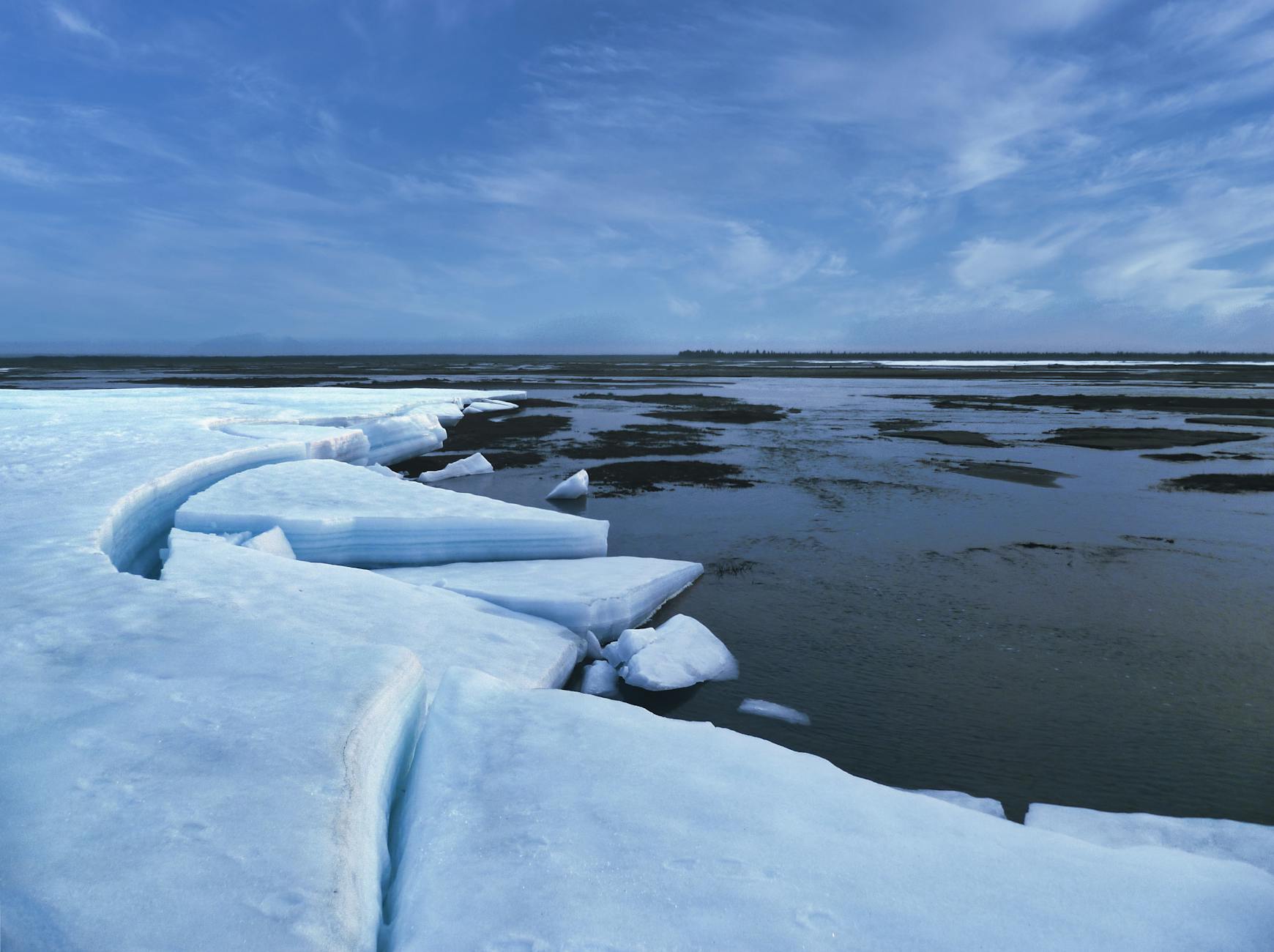
A sweeping analysis of northern Alaska’s landscape shows that the Arctic is undergoing a fundamental transformation as warming temperatures thaw frozen ground, flushing ancient carbon into the region's river systems. The research, led by geoscientist Michael Rawlins at the University of Massachusetts Amherst, details how deep-seated permafrost is melting and releasing organic material trapped for thousands of years.
The study, published in the journal Global Biogeochemical Cycles, analyzed 44 years of high-resolution data across a region of Alaska's North Slope spanning the size of Wisconsin. Researchers found that runoff is increasing, the thaw season is extending deep into the fall, and rivers are transporting significantly higher concentrations of dissolved organic carbon into the Beaufort Sea.
A Warming Feedback Loop
Arctic rivers are critical to the global climate system, delivering 11% of the world’s river water into the ocean despite the region's relatively small size. As the ground’s "active layer"—the portion that freezes and thaws annually—deepens due to a warming climate, more groundwater is infiltrating these rivers, carrying prehistoric carbon with it.
Once this carbon reaches the ocean, much of it converts into carbon dioxide. This process contributes directly to global warming, creating a feedback loop where rising temperatures thaw more ground, which in turn releases more greenhouse gases.
"What makes this question so hard to answer is that direct observations are very sparse in northern Alaska," Rawlins said. "There are nowhere near enough river sample measurements to quantify inputs to estuaries along the entire Alaskan North Slope."
To overcome the lack of direct data, Rawlins utilized the Permafrost Water Balance Model, a tool he has refined over 25 years. By running simulations on a supercomputer, the team tracked daily river flows and coastal exports from 1980 through 2023. The model indicates that the Arctic could see up to 25% more runoff and 30% more subsurface flow over the next 80 years.
These findings provide a granular look at environmental shifts that were previously obscured by the use of larger, less precise modeling tools. By focusing on kilometer-scale data, the team identified that northwest Alaska is currently experiencing the most significant increases in carbon export.
This data serves as a vital resource for ongoing projects like the Beaufort Lagoon Ecosystems initiative, which monitors the health of these coastal estuaries. With the Arctic warming faster than the rest of the planet, the study suggests that the release of ancient carbon is no longer a localized issue but a significant driver of atmospheric change.