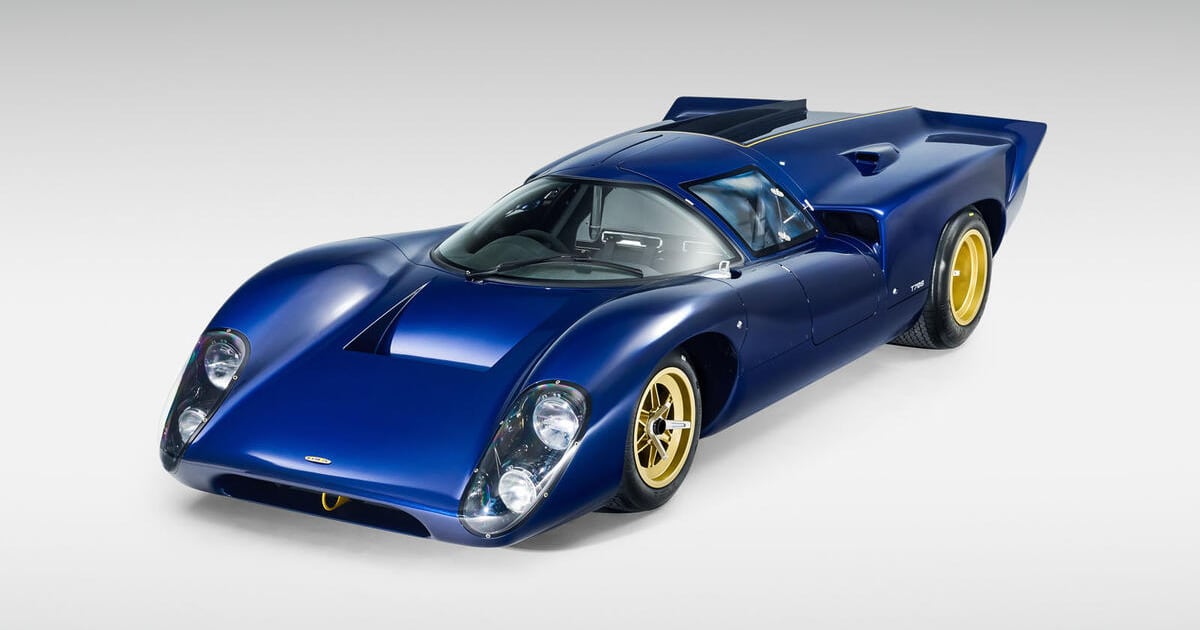
British automotive marque Lola has officially announced the return of its legendary T70 sports car through sustainable new models. The company unveiled the T70S and T70S GT variants to mark the revival of this iconic 1960s racing machine. This initiative aims to preserve the vehicle's competitive DNA while integrating modern sustainable manufacturing processes.
Key Details
The standard T70S model retains the original mechanical essence with a naturally aspirated 5.0-liter V8 engine. This powertrain generates approximately 530 horsepower paired with a five-speed manual transmission for authenticity. The resulting weight of just 860 kilograms enables acceleration from zero to 100 kilometers per hour in roughly 2.5 seconds.
Conversely, the T70S GT variant adopts a configuration optimized for track and road usage with distinct tuning. It utilizes a 6.2-liter Chevrolet V8 engine that develops 500 horsepower for a slightly different dynamic experience. Top speed reaches 322 kilometers per hour with acceleration taking approximately 3 seconds to complete the sprint.
A key innovation lies in the construction methods employed for this modern reinterpretation of a historic vehicle. Lola has incorporated advanced composite materials and sustainable manufacturing processes to significantly reduce environmental impact. The goal is to adapt the historic vehicle to current industry standards without altering the core driving experience.
Design elements remain faithful to the original silhouette, including the low profile and functional aerodynamics of the era. Structural improvements and safety enhancements make the cars more usable by modern drivers in various conditions. This balance ensures the visual identity remains intact while meeting contemporary safety regulations effectively.
Market Context
Production will be strictly limited to 16 vehicles for both models combined across the global market. While official pricing remains unconfirmed, estimates suggest costs will range from US$400,000 upwards based on comparable modern recreations. This places the project firmly within the exclusive niche of high-end continuation cars.
"The initiative seeks to demonstrate that classics can evolve toward a more responsible future," according to the report by La Tercera. This sentiment reflects a broader shift where heritage brands adapt to modern environmental expectations and regulations.
The original T70 debuted in 1965 and quickly became a protagonist in championships like Can-Am and Daytona. That heritage remains intact, although the new models reinterpret the legacy with contemporary technologies and materials. The project maintains the monocoque chassis concept but updates it for current performance standards.
The project highlights a growing trend where automotive manufacturers preserve history through advanced engineering solutions. Similar to other high-end revival projects, this approach targets collectors rather than mass-market consumers seeking daily transportation.
Broader implications suggest a continued demand for high-performance vehicles that do not rely on full electrification. The automotive industry may see more manufacturers exploring sustainable methods for internal combustion legacy models moving forward.