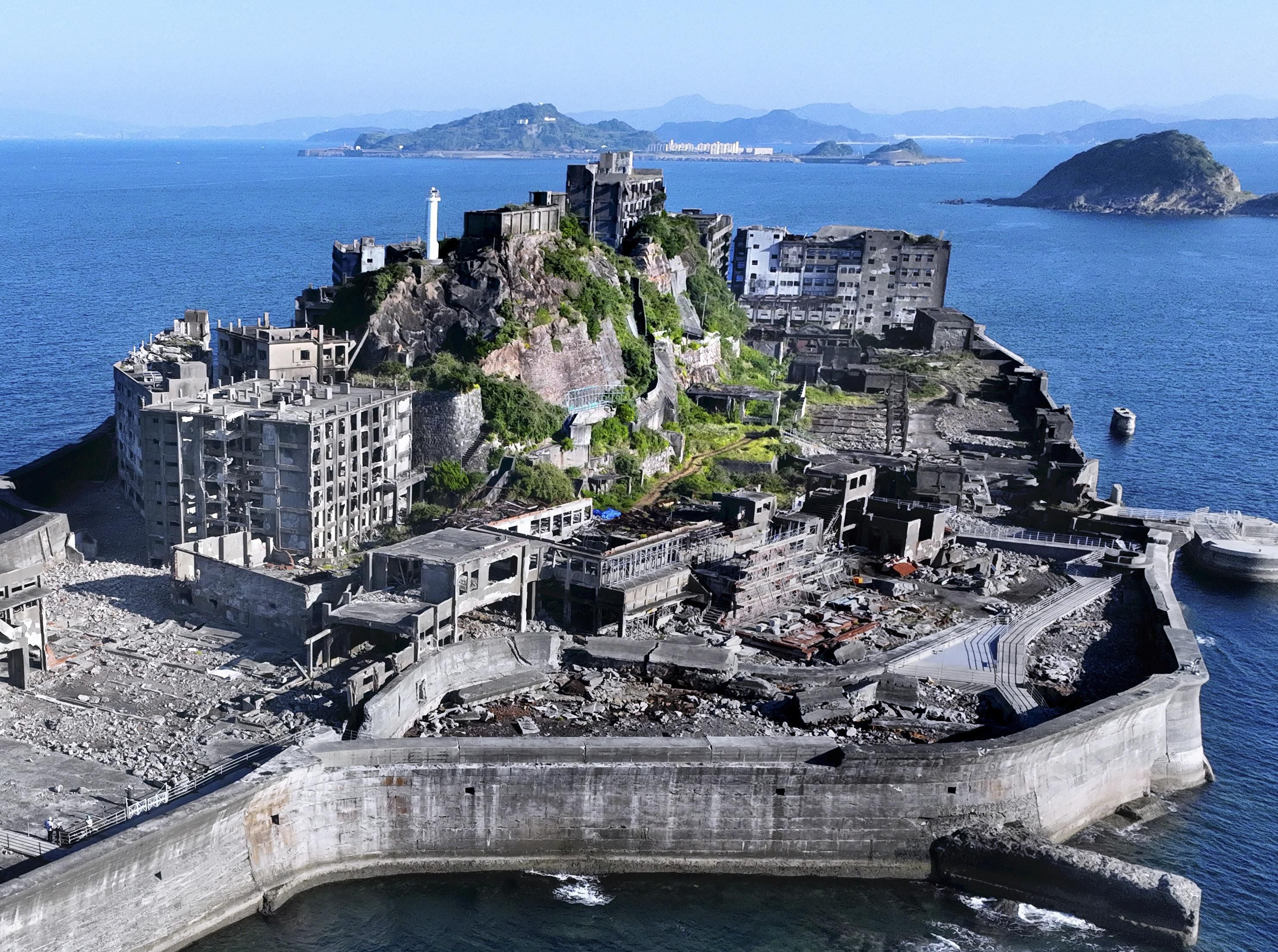
Hashima Island, a tiny outcrop off the coast of Nagasaki, serves as a stark monument to Japan’s aggressive industrial expansion during the 20th century. Developed by Mitsubishi, the island transformed from a remote coal-mining site into one of the most densely populated places on Earth before its eventual abandonment in 1974.
Following the discovery of coal in 1887, Mitsubishi turned Hashima into a high-capacity industrial engine. By 1916, the facility was extracting 150,000 tons of coal annually. To accommodate the growing workforce, the company reclaimed land from the sea using concrete sea walls, eventually creating a walled fortress filled with apartments, schools, hospitals, and cinemas.
A legacy of forced labor
The island’s rapid growth relied on a brutal labor system, particularly during the Second World War. According to reports cited by Xataka, Mitsubishi utilized forced laborers from China and Korea to sustain production levels, which reached 410,000 tons in 1941. By 1945, more than 1,300 workers had died on the island due to harsh conditions, malnutrition, and industrial accidents.
Architecturally, Hashima was a marvel of its time. In 1917, the island debuted a nine-story E-shaped complex, which held the title of the tallest building in Japan. Because of the extreme lack of space on the reclaimed land, the island was famously devoid of automobiles, with residents navigating narrow, cramped corridors between concrete blocks.
As the global energy market shifted in the 1960s, oil began to replace coal as the primary fuel source. Mitsubishi shuttered operations in 1974, leaving the island to decay as a ghost town. The site was transferred to Nagasaki city in 2002 and later designated a UNESCO World Heritage site in 2015.
While the ruins have gained modern fame as a filming location for the James Bond movie 'Skyfall,' the physical reality of the island remains far more somber. The skeletal concrete buildings continue to attract tourists, yet they stand primarily as a reminder of the human cost paid for the energy that powered Japan's development.