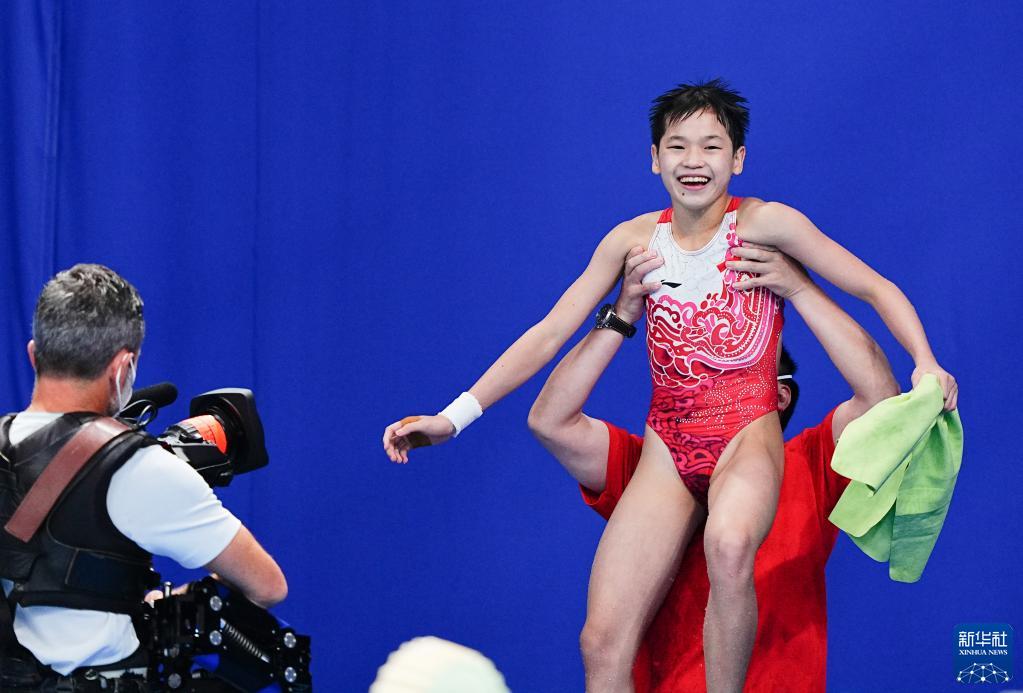
China’s General Administration of Sport has launched an investigation into the persistent cyberbullying of diving star Quan Hongchan. The agency confirmed Wednesday that it is working with authorities in Guangdong province to address a wave of online abuse targeting the 19-year-old athlete.
Quan, who secured her first gold medal at the Tokyo 2020 Games at age 14 and added two more in Paris this year, has faced intense scrutiny regarding her appearance. In recent interviews, the diver revealed that the toxic commentary and pressure to diet nearly led her to quit the sport.
“After the Olympics I actually thought about retiring,” Quan told the Chinese magazine Renwu. She described a constant barrage of criticism regarding her weight, noting that both the public and members of the sporting community frequently labeled her as “fat.”
A crackdown on 'toxic fandom'
The General Administration of Sport’s swimming management centre issued a statement condemning the behavior. Officials stated that they are actively verifying reports of “malicious attacks and false information” and have reported the incidents to local police.
“Our centre takes this very seriously and immediately launched verification and handling work,” the statement read. The administration added that it “firmly” rejects what it described as “abnormal” fan culture.
The Ersha Sports Training Centre in Guangdong, where Quan trains, echoed these sentiments. The facility declared that athletes are a “valuable national asset” and warned that harassment has crossed both legal and moral boundaries.
State-backed media have increasingly labeled these aggressive fan behaviors as “toxic fandom.” This phenomenon has seen supporters obsess over the personal lives of athletes while simultaneously launching hostile campaigns against rivals and even the stars themselves.
Quan’s sudden rise to fame has transformed her life in her home village of Maihe into a public spectacle. Since her Olympic success, crowds have frequently mobbed her at hotels and traveled to her hometown, turning her private residence into a tourist destination.
An editorial in the state-backed Global Times previously criticized this trend, arguing that it represents an unhealthy culture where public adoration quickly pivots to open hostility. As Quan continues to navigate her career, authorities have pledged a broader crackdown on the online environment surrounding the nation’s top athletes.