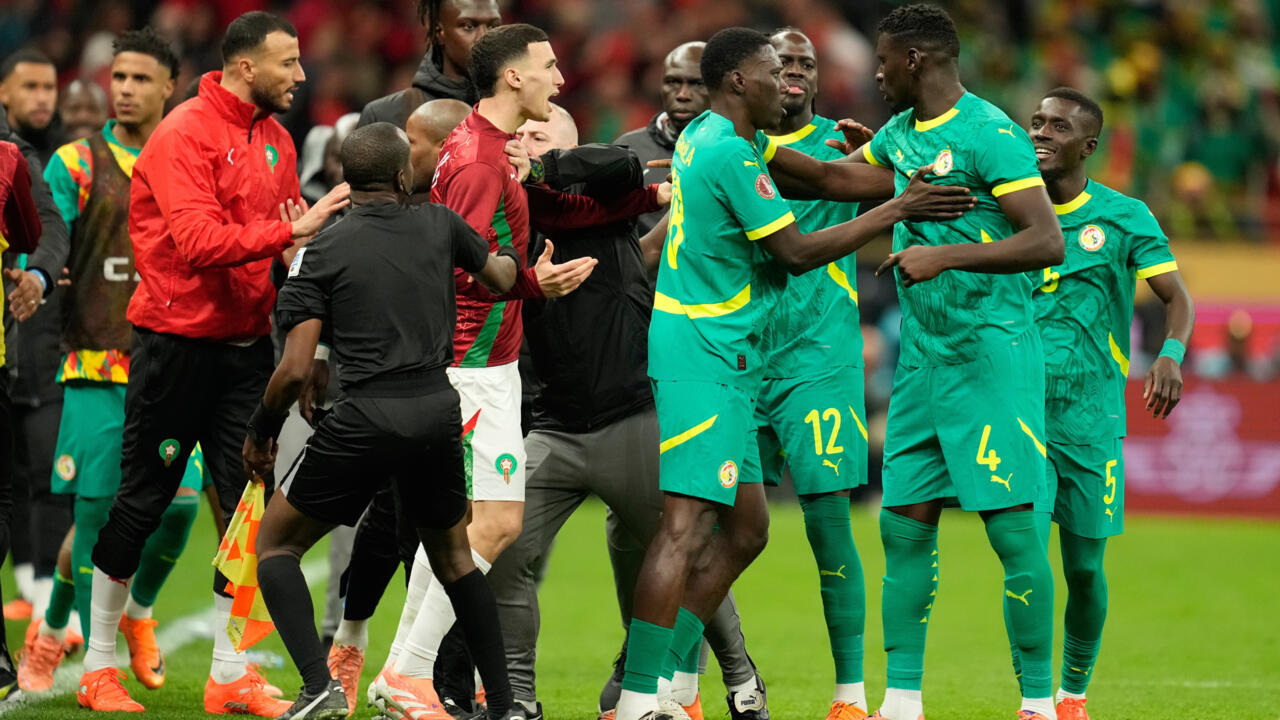
The Confederation of African Football (CAF) has concluded its disciplinary review of the contentious Africa Cup of Nations (AFCON) final between Senegal and Morocco, announcing a series of punitive measures targeting both national football bodies and key personnel. The sanctions underscore CAF's commitment to upholding sporting integrity following a match marred by on-field disputes and sideline altercations.
Senegal's head coach, Pape Thiaw, has been suspended for five competitive CAF matches, cited for 'unsporting conduct' and 'bringing the game into disrepute' during the January 18 final in Rabat, which Senegal ultimately secured 1-0 in extra time. Furthermore, the Senegal Football Federation (FSF) faces a significant financial penalty, totaling $615,000, attributed to the collective misconduct of players and technical staff.
Further disciplinary action was directed at Senegalese players, with English Premier League forwards Iliman Ndiaye and Ismaila Sarr each receiving two-match bans for their actions toward match officials. These penalties, while significant for the immediate future of the national team, will not impact their qualification campaign for the 2026 FIFA World Cup.
Morocco has also incurred substantial financial penalties, with the Royal Moroccan Football Federation (FRMF) fined $200,000 for the 'inappropriate behaviour of the stadium ball boys' and an additional $100,000 for staff obstructing the VAR review area. Individual player suspensions include a three-match ban for forward Ismael Saibari and a two-match suspension for captain Achraf Hakimi.
The volatile nature of the final, which included disallowed goals, disputed penalty calls, and temporary pitch invasions, necessitated a strong response from the governing body. The sanctions aim to deter future breaches of the CAF disciplinary code, emphasizing principles of fair play, loyalty, and integrity.
These disciplinary actions, while focused on the immediate aftermath of the final, carry broader implications for the continental football landscape, setting precedents for managing high-stakes international fixtures. The financial penalties levied against both federations represent a notable economic consequence for the disciplinary infractions.
Source attribution: Based on reports from the Confederation of African Football announcements regarding the AFCON final disciplinary outcomes.