A significant fiscal and political battle is brewing across the United States as conservative legislators and activists push for the complete abolition of property taxes levied on primary residences. This movement, intensified by rapid post-pandemic real estate appreciation that has dramatically inflated annual tax bills, challenges the foundational funding mechanisms for local governance and public schooling.
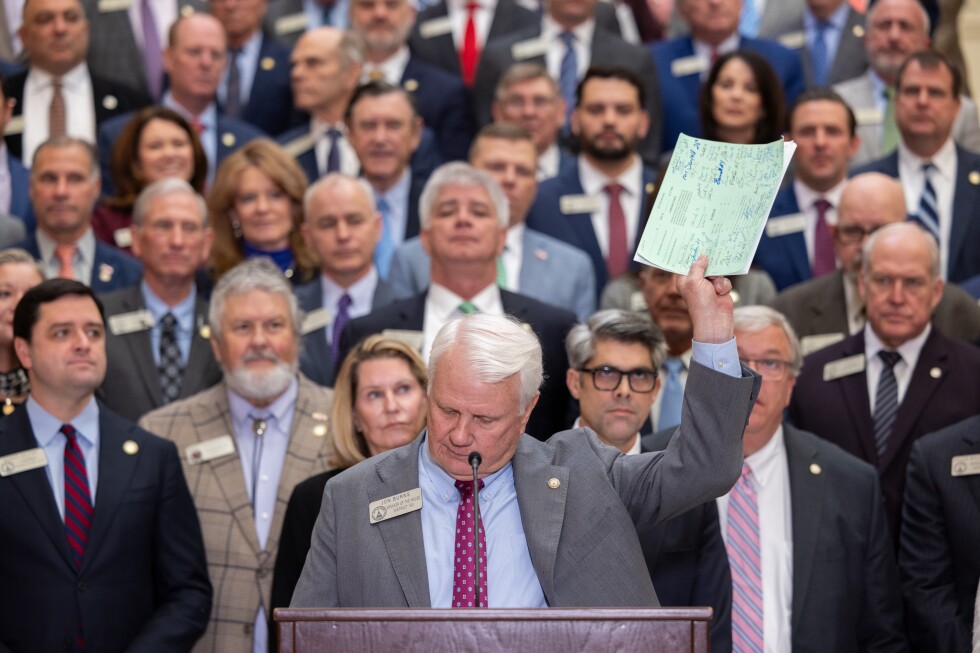
Jurisdictions like Georgia, Florida, and Texas are witnessing high-profile legislative efforts. In Georgia, House Republicans have unveiled a multi-stage plan targeting the phase-out of homeowner property taxes by 2032, proposing that municipalities shift revenue collection to existing or new sales tax structures. Florida Governor Ron DeSantis has similarly stated this as an ultimate goal, currently focusing on eliminating non-school property taxes over a decade.
These proposals often rest on the philosophical argument that property ownership is incomplete when annual levies mandate potential government seizure of the asset for non-payment. However, experts caution that eliminating this stable revenue source, which secures billions nationally, forces difficult trade-offs. "The complete elimination of the property tax for homeowners is really going to be very difficult in most states and localities around the country, and undesirable in most places," noted Adam Langley of the Lincoln Institute of Land Policy.
The fiscal viability of these sweeping changes varies significantly based on existing state wealth. North Dakota offers a unique case study, leveraging substantial oil severance tax revenues accrued in its state savings account to incrementally cover homeowner liabilities. This state-level resource buffer allows Bismarck to subsidize relief efforts currently wiping out bills for tens of thousands of households, offering a model unavailable to most states.
In contrast, states like Texas and Georgia rely on intricate revenue substitution plans. Georgia's proposal, for instance, involves drastically raising the homestead exemption and directing local entities to compensate for lost billions via sales tax adjustments—a move complicated by existing local sales tax rate caps and the political difficulty of securing constitutional amendments requiring broad legislative and voter support.
The core challenge remains the dependency of K-12 education, which typically consumes the majority of property tax receipts. Local governments dispute claims that they can absorb cuts, arguing that shifting to sales tax structures may not generate sufficient, stable revenue, potentially jeopardizing municipal services ranging from sanitation to emergency response.
This political trajectory echoes past tax revolts, such as California's 1978 Proposition 13, which capped assessment increases. While such measures provide immediate relief to long-term homeowners facing high tax burdens on appreciated assets, they often create intergenerational equity issues and starve local government budgets of necessary operational flexibility.
As these state-level legislative maneuvers progress through contentious debate, the outcome will serve as a critical indicator of whether fiscal conservatism can successfully engineer a fundamental restructuring of local public finance without fracturing essential community services. (Source: Associated Press reporting)