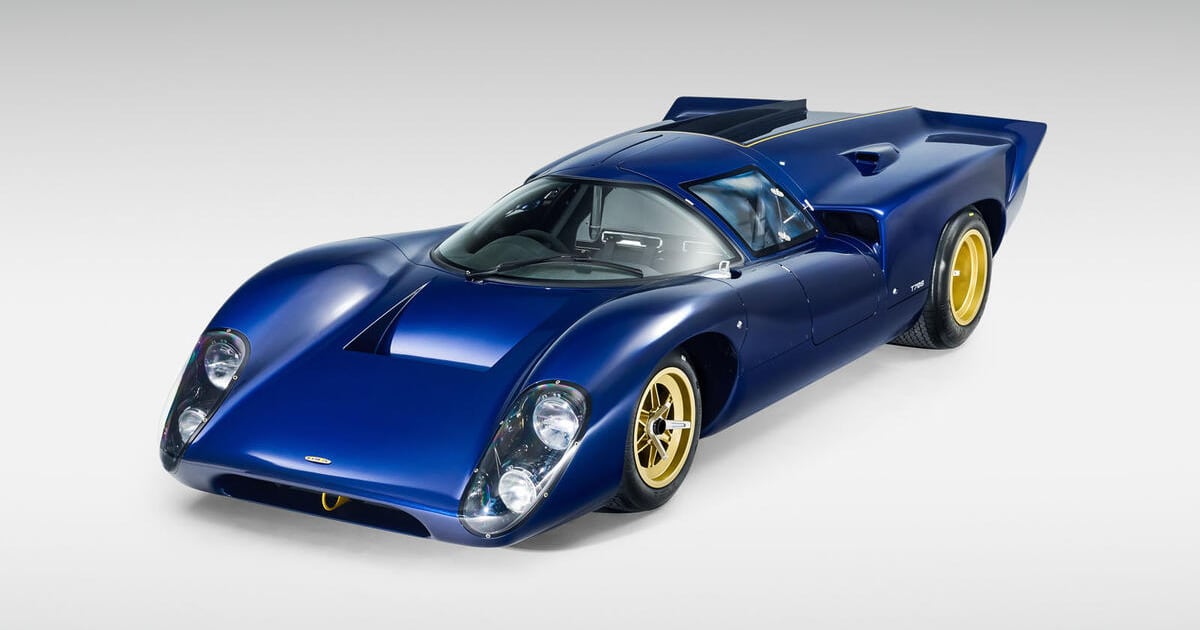
British automotive marque Lola has officially unveiled the return of its legendary T70 racing prototype with a new sustainable focus. The brand presents two new models, the T70S and T70S GT, which reinterpret the iconic 1960s design using modern manufacturing standards. This initiative aims to demonstrate that historic vehicles can evolve to meet contemporary environmental requirements while retaining their performance heritage.
Key Details
The project takes the original T70, a sports car that debuted in 1965, as its foundational base for the new engineering specifications. That vehicle quickly became a protagonist in major championships such as Can-Am and Daytona thanks to its aluminum monocoque chassis and powerful V8 engines. Today, that heritage remains intact although the team has reinterpreted the legacy with technologies that are current to 2024.
In terms of technical specifications, the T70S conserves the original mechanical essence with a naturally aspirated five point zero liter V8 engine. This powertrain develops close to 530 horsepower and is associated with a manual transmission featuring five gears. Its weight of just 860 kilograms allows for high level performance with acceleration from zero to 100 kilometers per hour occurring in around two point five seconds.
The T70S GT variant adopts a slightly different configuration with a focus oriented more toward track and road usage. It maintains the classic architecture but includes adjustments in power and dynamic behavior to suit the intended market segment. The unit features a six point two liter Chevrolet V8 engine that develops 500 horsepower for a maximum speed exceeding 320 kilometers per hour.
What This Means
One of the most innovative aspects of the project lies in its construction methods which prioritize environmental responsibility. Lola has incorporated advanced composite materials and more sustainable fabrication processes to reduce the overall carbon footprint. The target is clear: preserve the essence of historical cars but adapt them to the current standards of the global automotive industry.
"The initiative seeks to demonstrate that classics can evolve toward a more responsible future," reported La Tercera regarding the project goals. This statement highlights the growing trend of blending heritage value with modern sustainability mandates in the luxury sector.
Regarding design, both models respect the proportions and lines of the original T70 with fidelity including its low silhouette. They integrate structural improvements and safety enhancements that make them more usable and compliant with modern safety regulations. The aesthetic appeal remains strong while ensuring the vehicles meet the rigorous demands of contemporary driving environments.
At a commercial level, these models are positioned within the exclusive niche of continuation cars with highly artisanal production methods. While the brand has not confirmed official figures, the expected price sits in ranges similar to or higher than US$400,000 based on original unit values. Production will be strictly limited to 16 vehicles to ensure scarcity and maintain the brand's premium positioning.
This move reflects a broader shift in the automotive sector where legacy brands seek to monetize their history through limited runs. The success of this program could influence how other manufacturers approach the modernization of their classic racing lineups. Analysts will watch closely to see if this model influences other manufacturers to adopt similar sustainable revival strategies.