India Pivots to Semiconductor Assembly as Supply Chain Resilience Priority
India leverages its chip design expertise to build domestic semiconductor assembly capabilities, reducing reliance on concentrated global supply chains.
India Pivots to Semiconductor Assembly as Supply Chain Resilience Priority
Publicidad
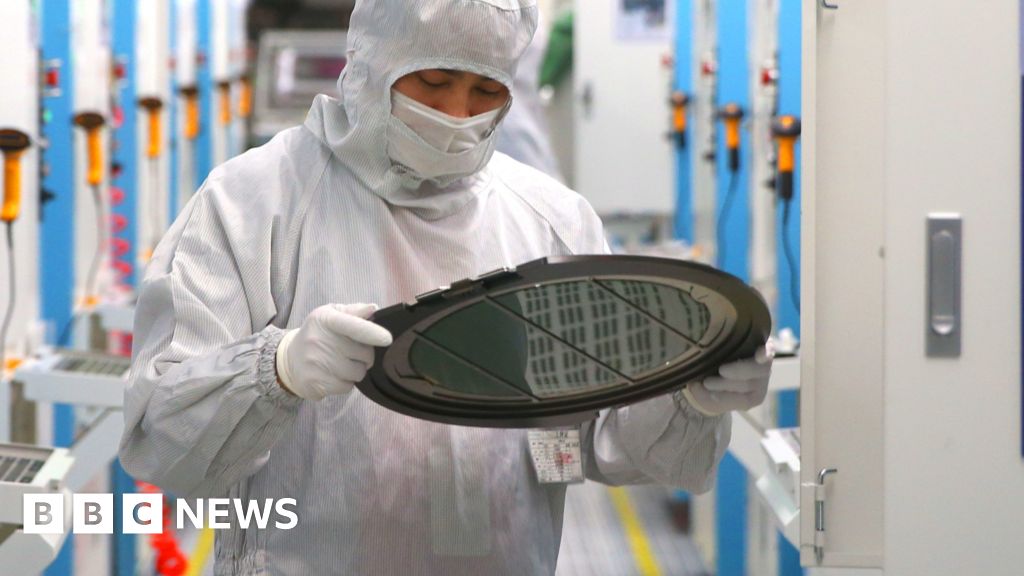
India is positioning itself as a critical player in the global semiconductor value chain by focusing on chip assembly and testing operations, marking a strategic shift away from complete dependence on overseas manufacturing following supply chain disruptions exposed during the COVID-19 pandemic.The South Asian economy, home to an estimated 20% of the world's semiconductor engineers, is leveraging its established chip design capabilities to build domestic manufacturing capacity in the less capital-intensive assembly and testing segments of the industry."The pandemic made it clear that semiconductor manufacturing is too concentrated globally, and that concentration carries serious risk," said Arnob Roy, co-founder of Bangalore-based Tejas Networks, which designs telecommunications equipment requiring specialized chips for network infrastructure.India's approach targets the third stage of semiconductor production—Outsourced Semiconductor Assembly and Test (OSAT)—where silicon wafers are sliced into individual chips, packaged, and tested. This strategy bypasses the extremely capital-intensive wafer fabrication facilities dominated by Taiwan and pursued aggressively by China."Assembly, test and packaging are easier to start than fabs and that is where India is moving first," explained Ashok Chandak, president of the India Electronics and Semiconductor Association (IESA). Multiple such facilities are expected to enter mass production this year.Kaynes Semicon, established in 2023 with government support, became the first company to operationalize this strategy with a $260 million facility in Gujarat state that began production in November. The plant focuses on automotive, telecommunications, and defense applications rather than cutting-edge consumer electronics or artificial intelligence chips."India does not need the most complex datacenter or AI chips on day one. You build an industry by first serving your own market. Scale has to come first," said Raghu Panicker, CEO of Kaynes Semicon.The initiative represents a calculated response to global supply chain vulnerabilities that became acute during the pandemic, when semiconductor shortages forced production cuts across multiple industries worldwide. India's strategy emphasizes building resilience through diversification rather than attempting to compete directly with established manufacturing hubs in the most advanced chip categories.However, the transition faces significant challenges, particularly in workforce development. "Training takes time. You cannot shortcut five years of experience into six months. That is the single biggest bottleneck," Panicker noted, highlighting the cultural and technical adjustments required for semiconductor manufacturing precision.The government's semiconductor development program, led by Joint Secretary Amitesh Kumar Sinha of the Ministry of Electronics and Information Technology, aims to create an integrated ecosystem that reduces India's exposure to supply chain disruptions while capitalizing on existing engineering capabilities.For companies like Tejas Networks, which currently design chips domestically but manufacture them overseas, the emerging local capacity represents a significant strategic opportunity. "Over the next decade, we expect a significant semiconductor manufacturing base to emerge in India," Roy said, though he cautioned that developing complete chipset capabilities will require "patient capital and time."Source material adapted from BBC reporting